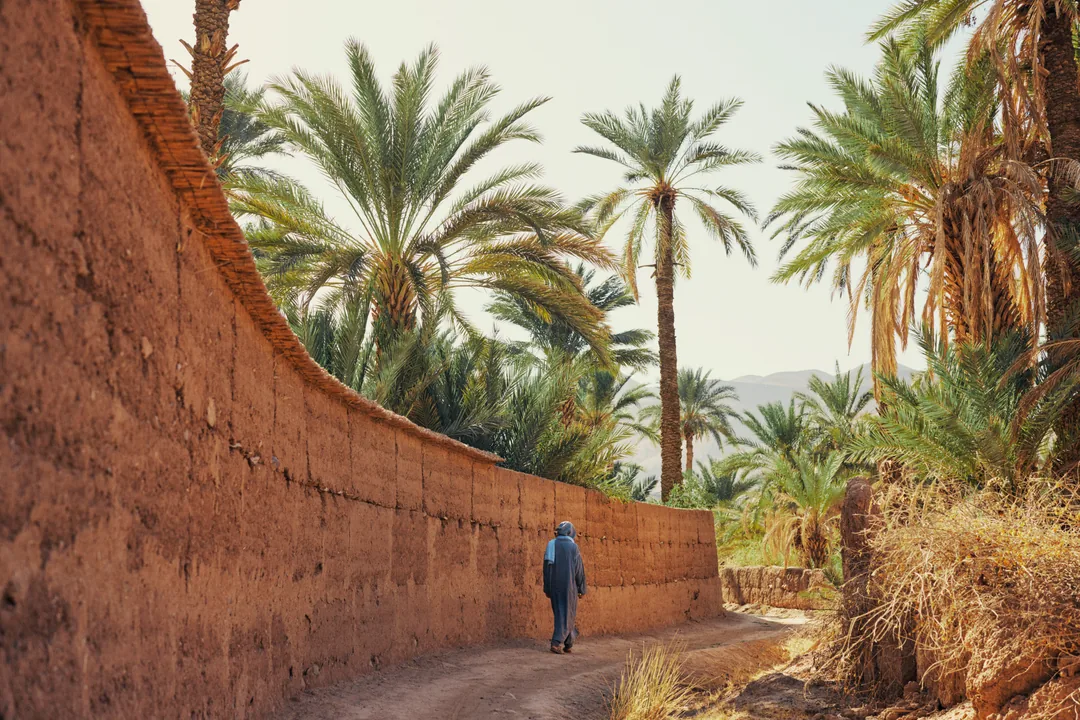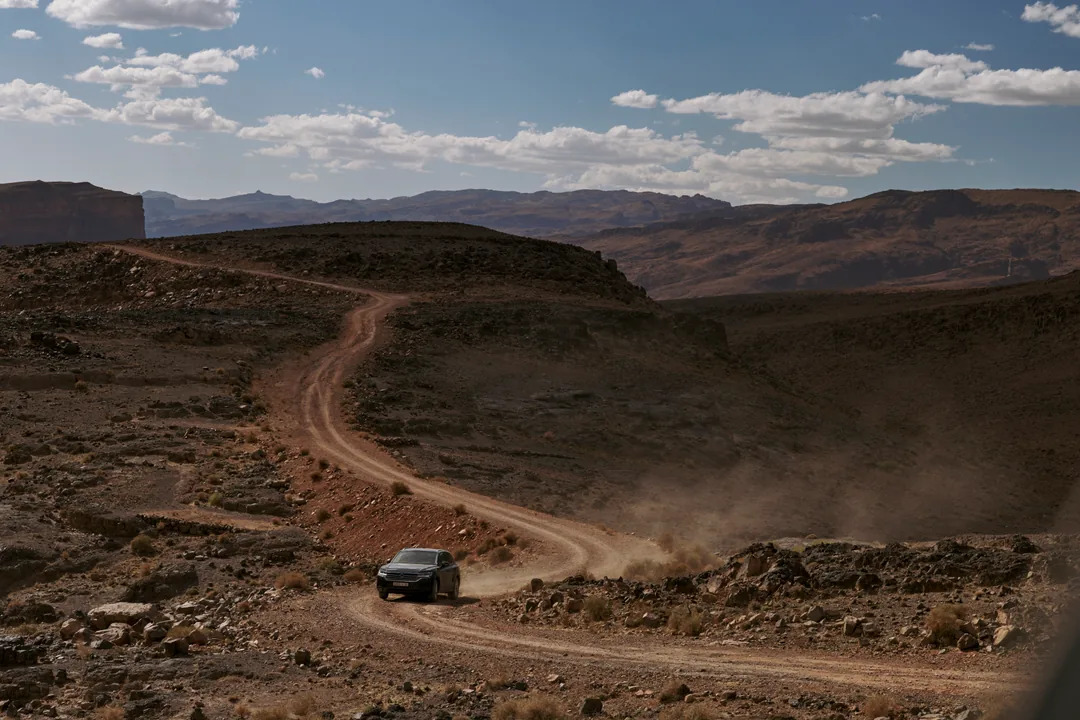
Djebel Saghro · Anti-Atlas · Morocco · 31°16′N 5°59′W
Nomads of Djebel Saghro
A day with the Ait Atta — tea, bread, herds, and firelight in Morocco's volcanic highlands.
The Tea Ritual
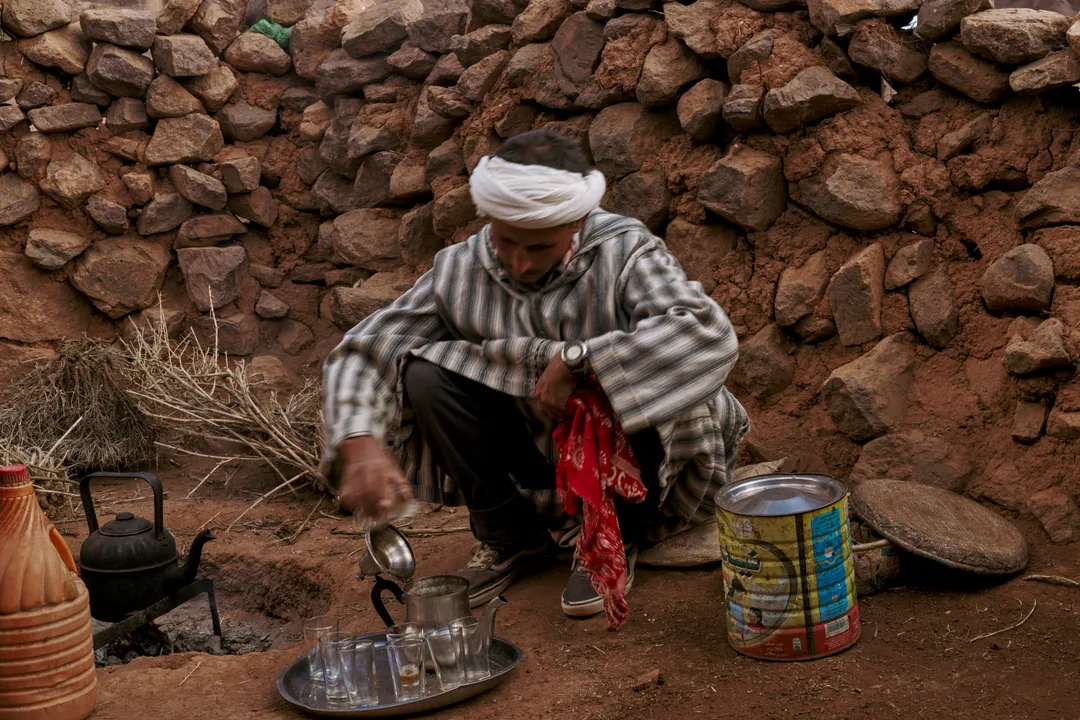
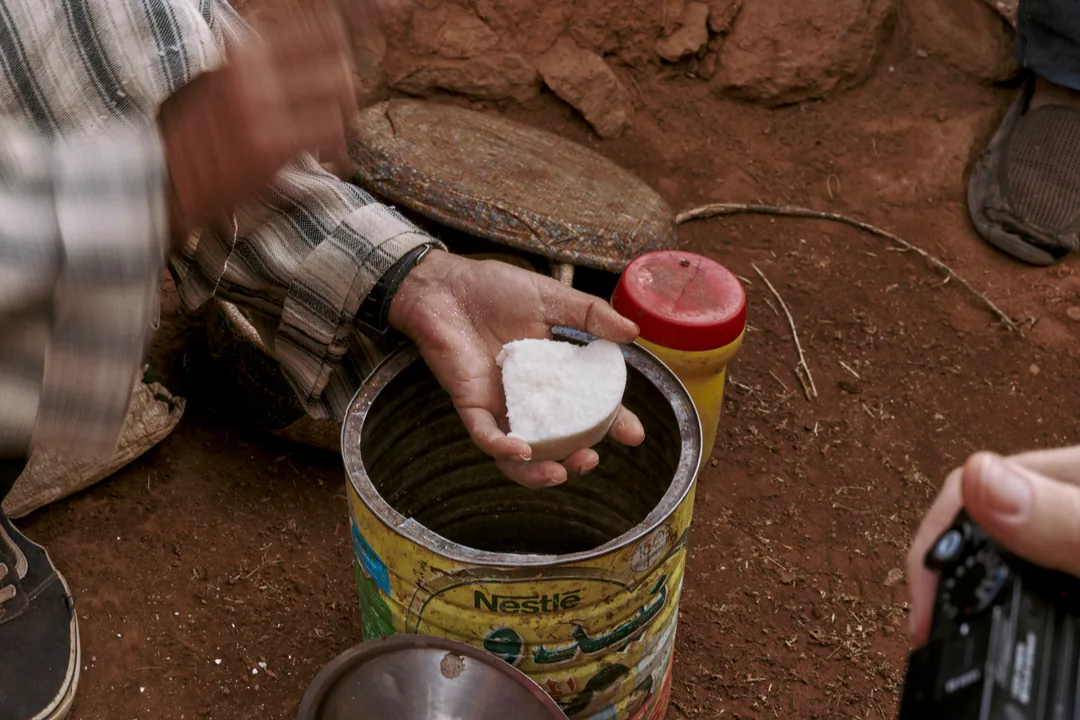
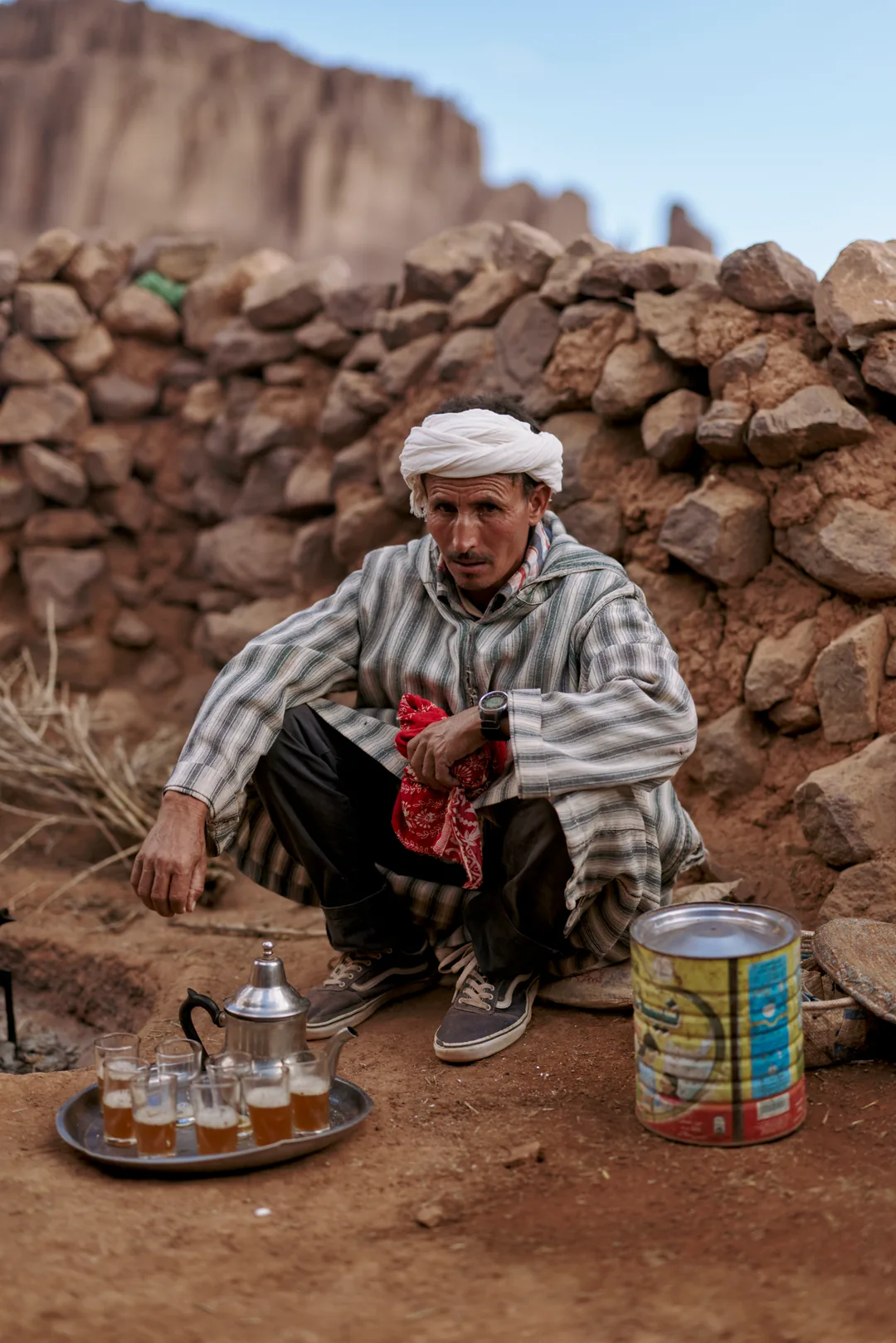
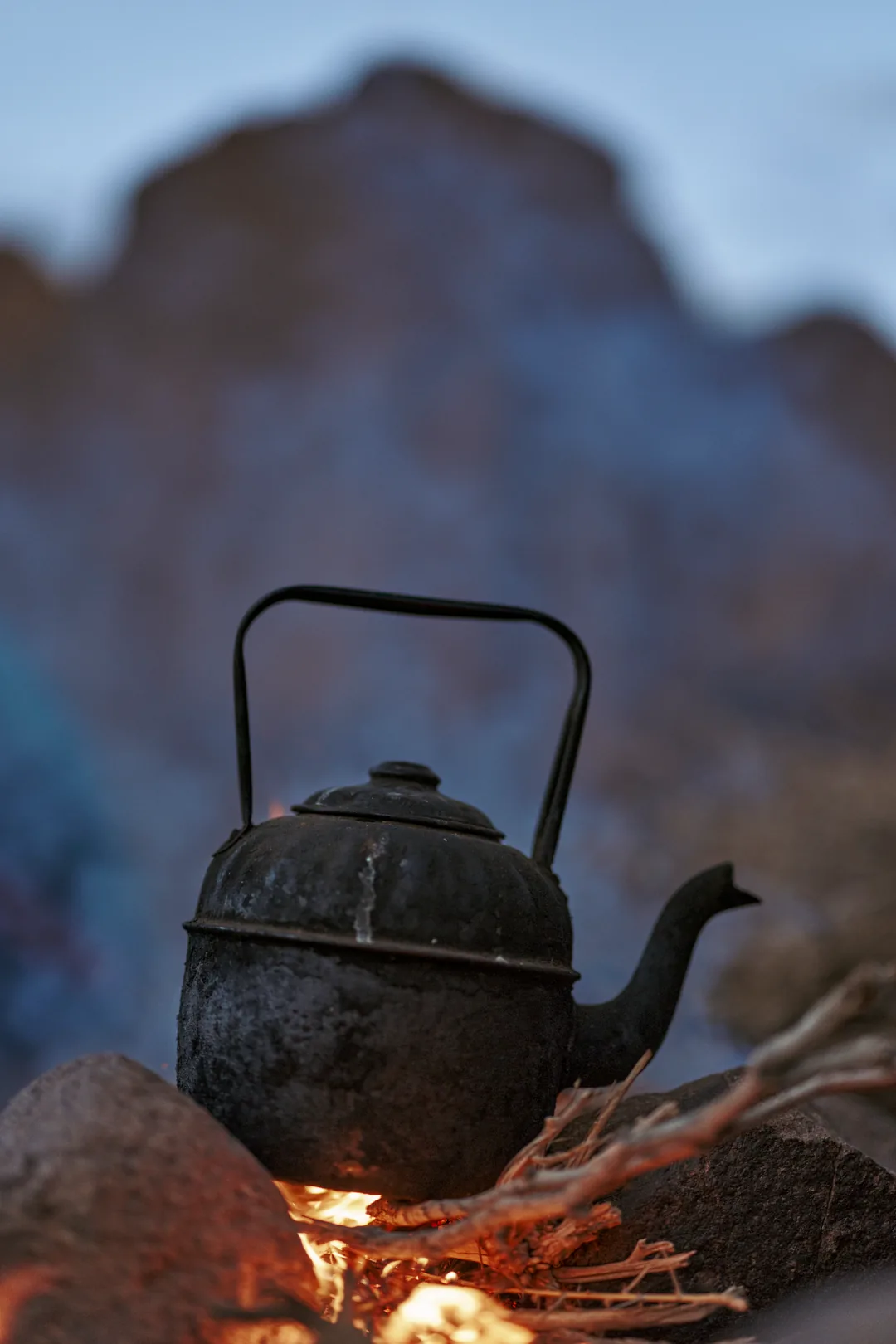
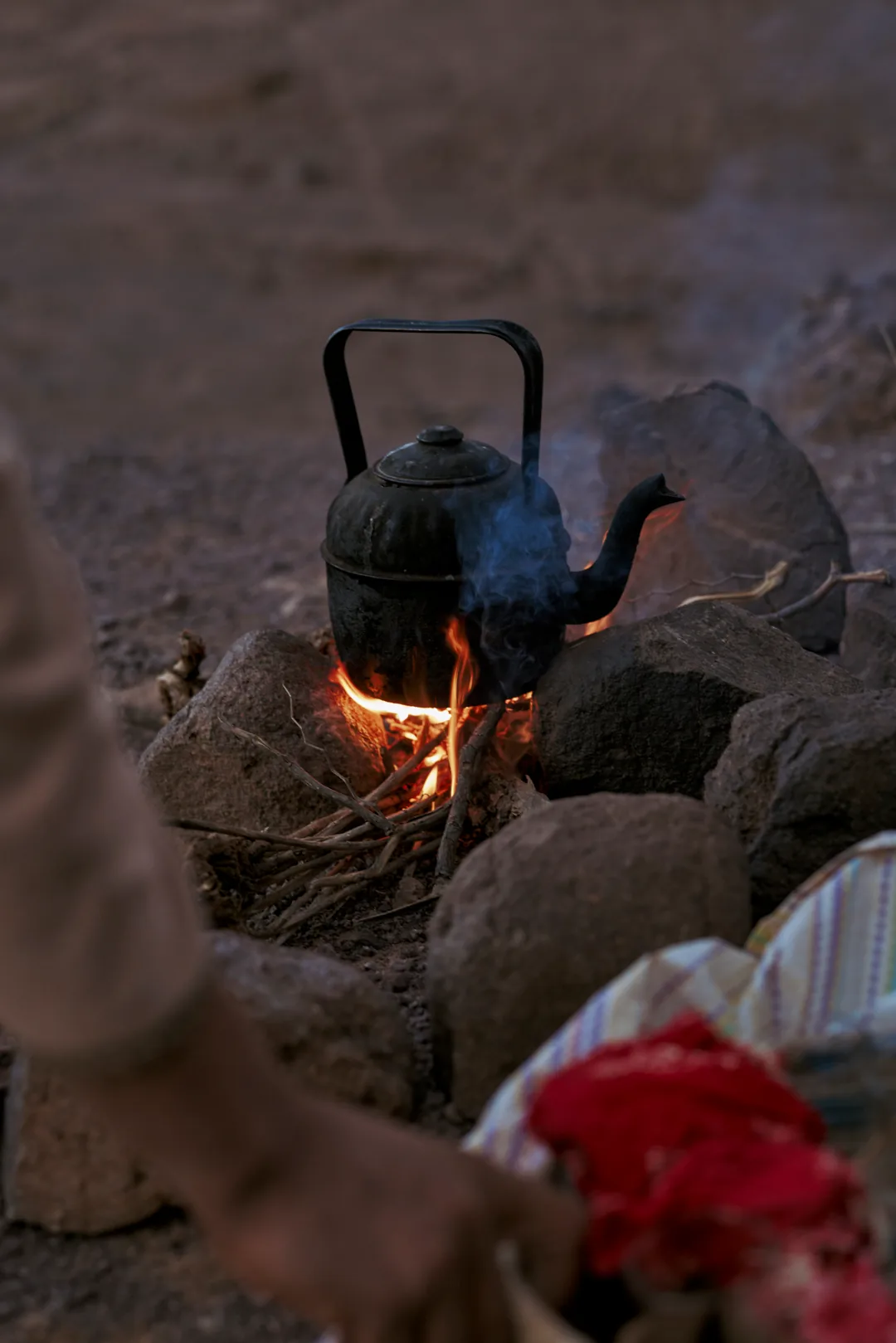
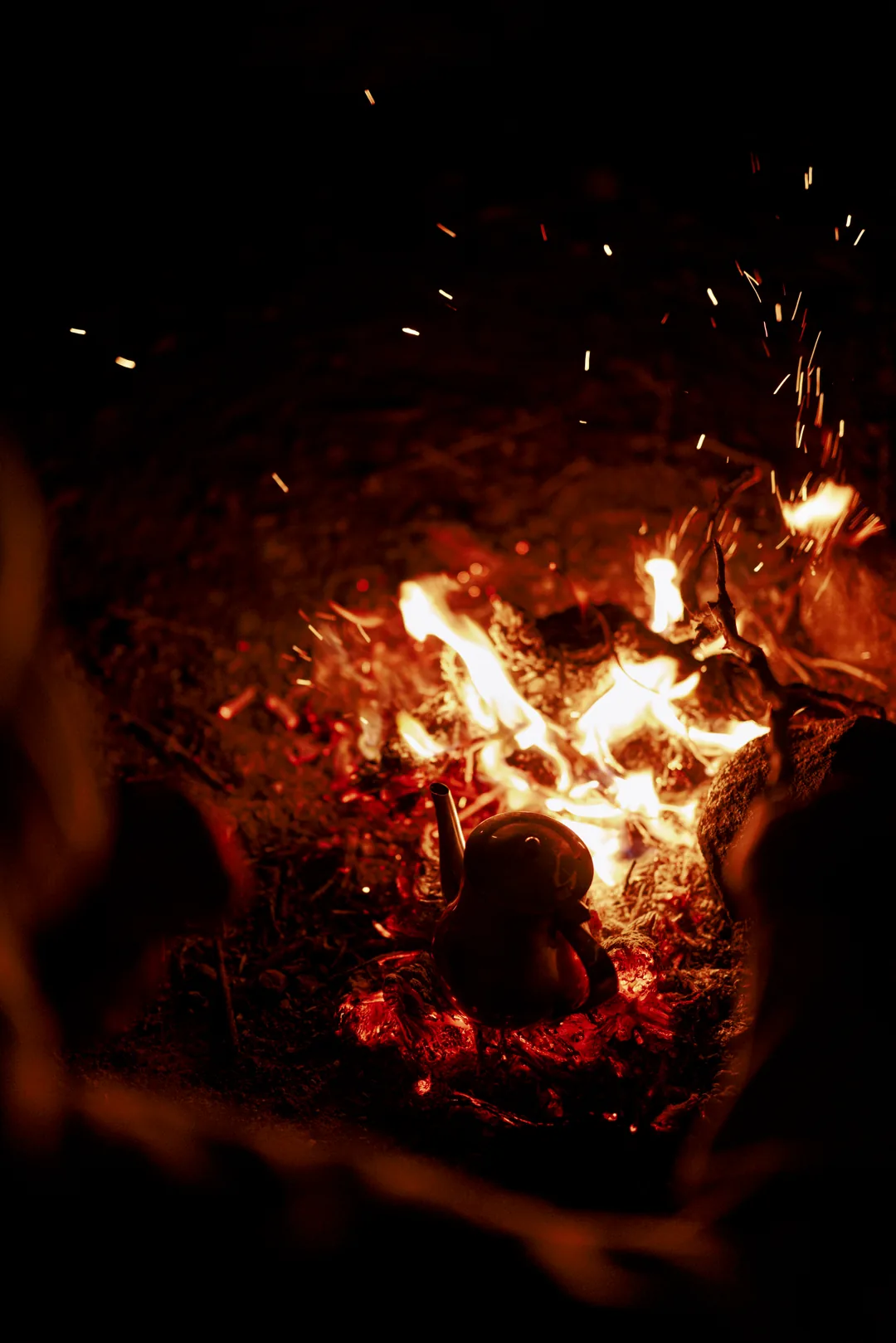
At the first camp, tea was already underway before we'd shut the engine off. The kettle sat on a triangle of stones over scrub-brush coals, and the man crouching beside it was measuring sugar into a Nestlé tin that had clearly served this purpose for years.
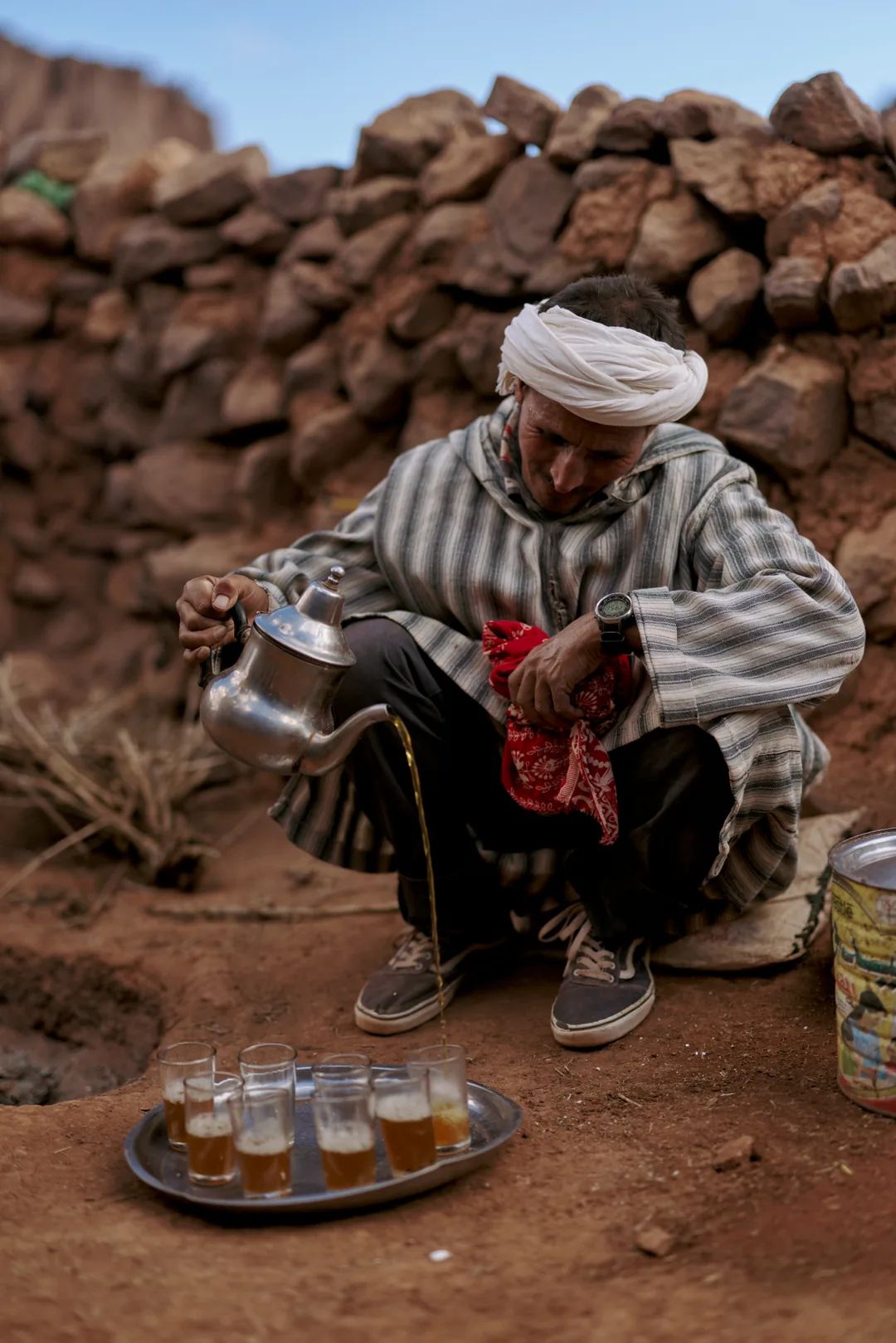
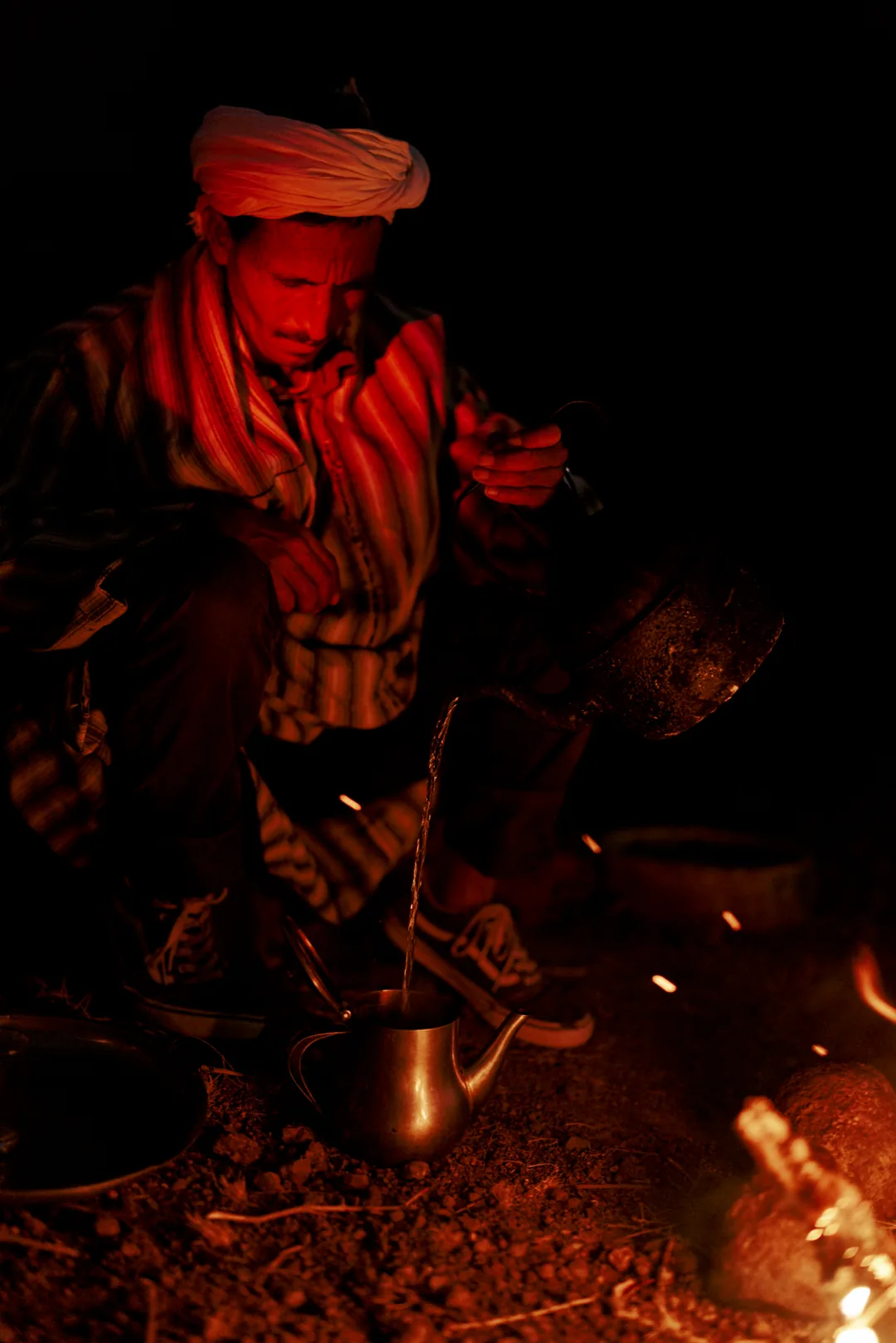
Three pours. The first is for the tea, the second for the sugar, the third for the mint. Each pour from waist height, a thin amber arc into the glass. We drank it standing, burning our fingers on the glasses.
Bread in the Dark
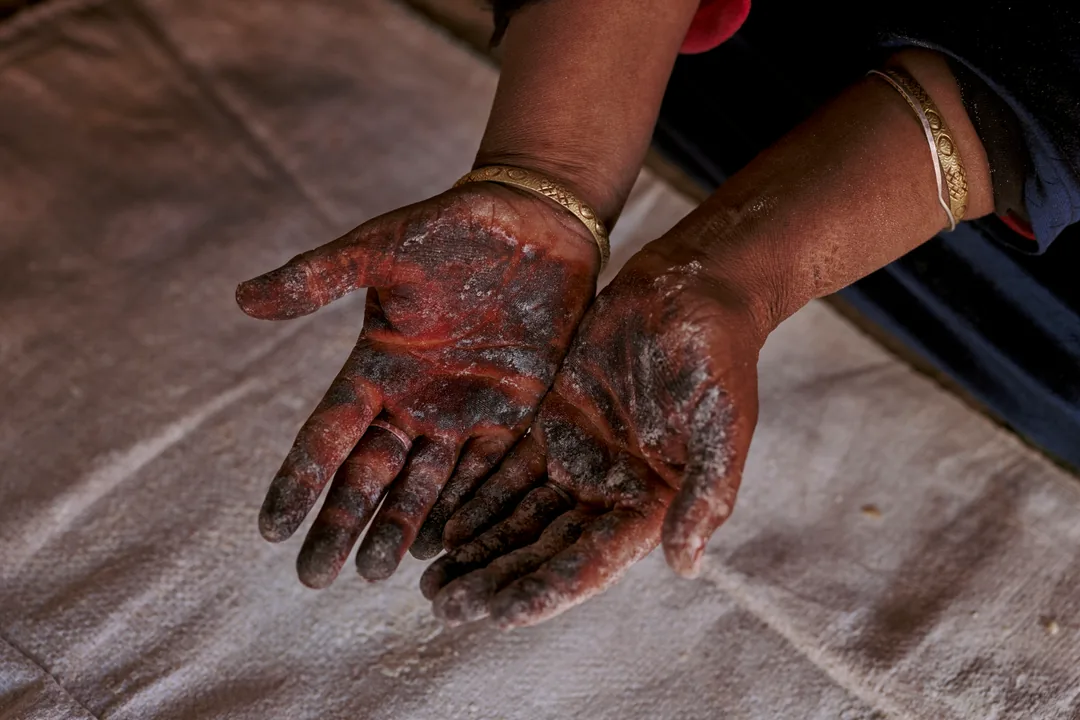
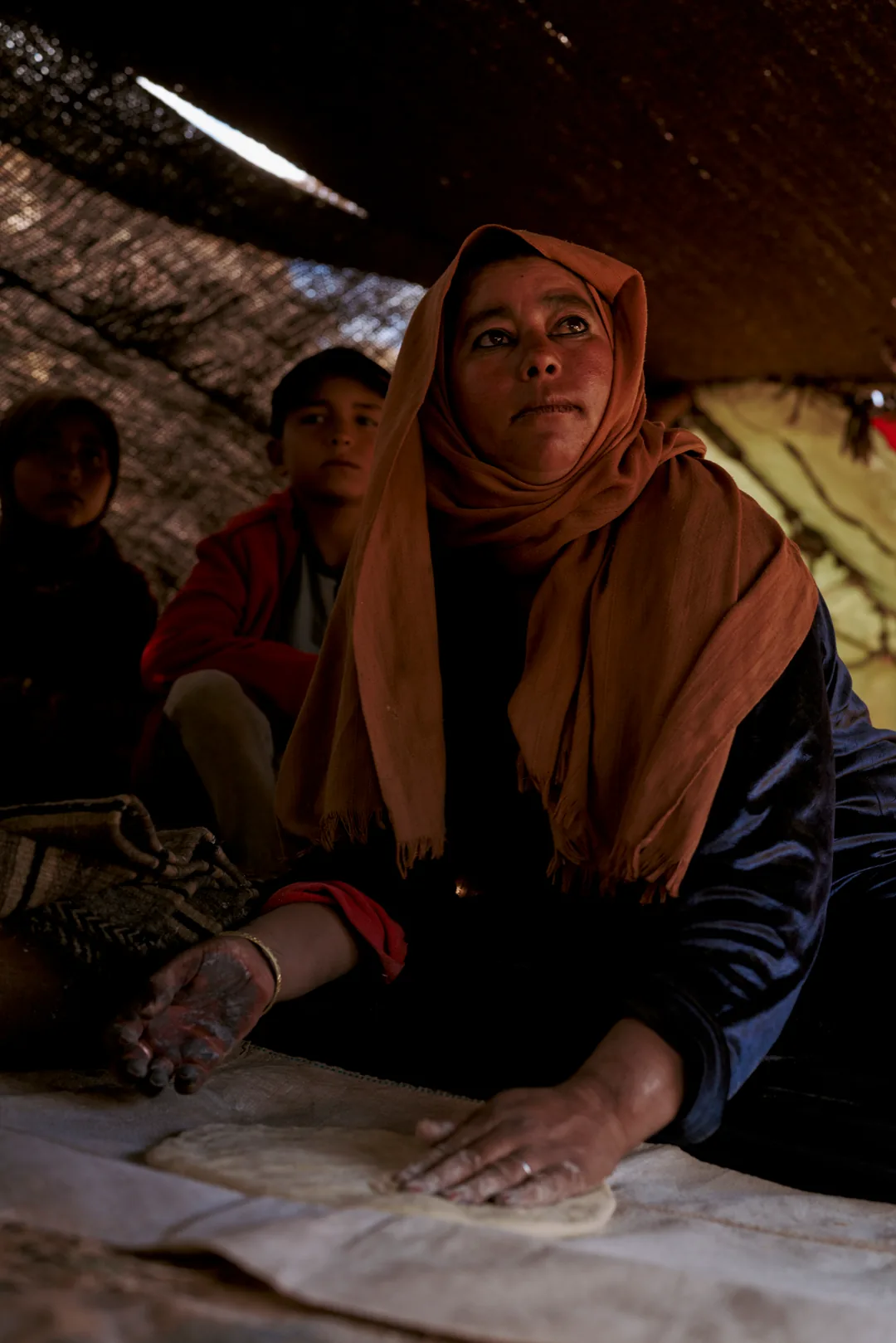
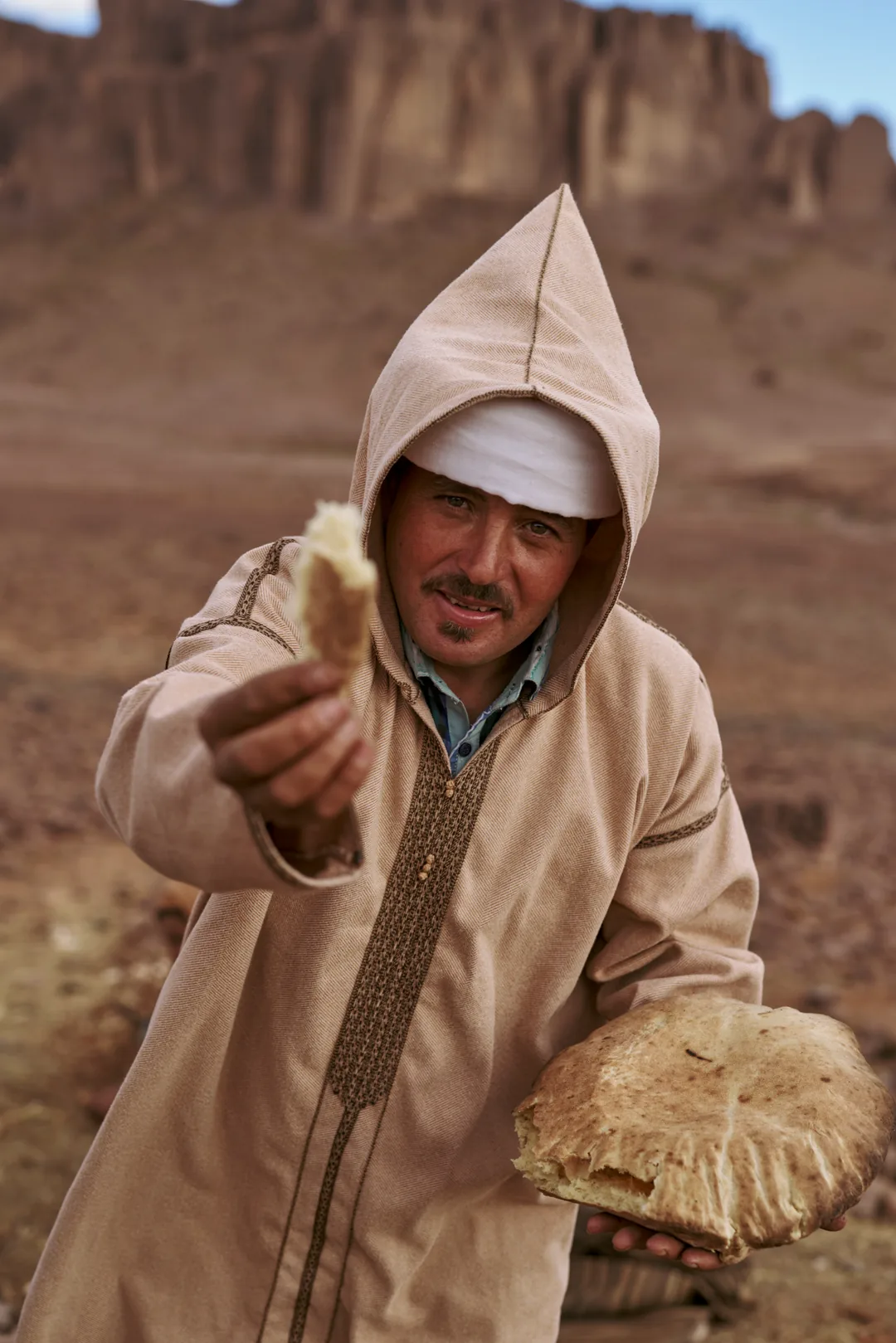
Inside the felt tent, a woman was making bread. The light came from a single gap in the canvas above, falling on the dough and on her hands as she worked it flat against a cloth laid on the ground. Two children sat behind her, watching us watch her.
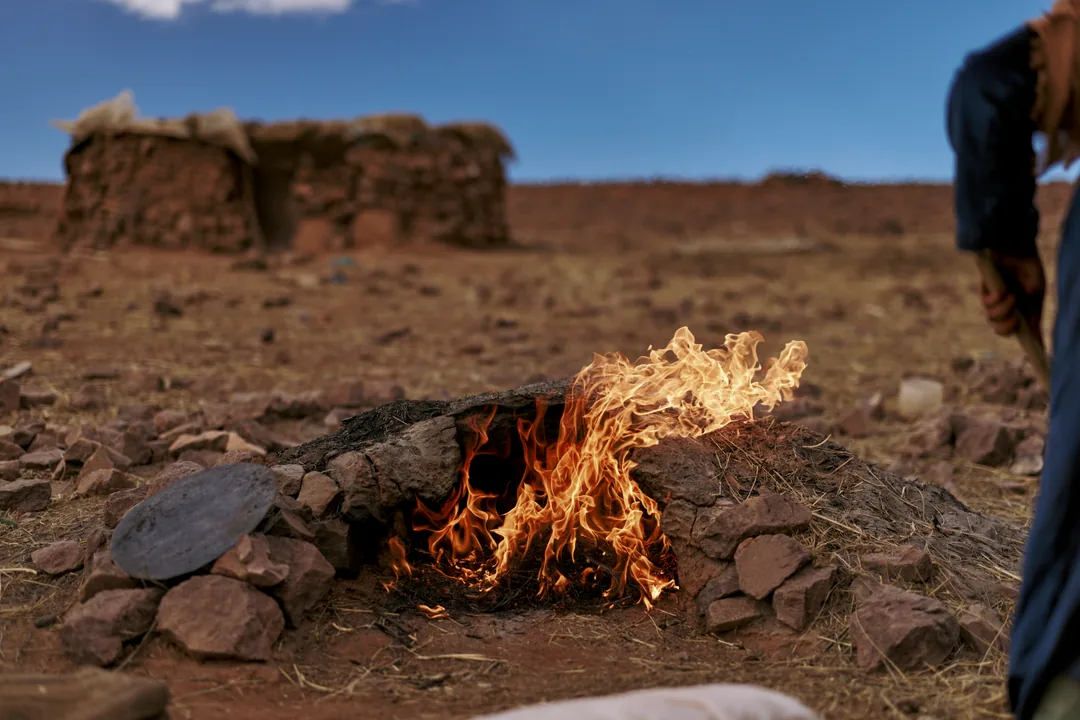
The bread would go into the ashes of the outdoor fire, buried under coals and pulled out twenty minutes later with a crust like cracked earth. It tasted like smoke and wheat and something chalky from the ash.
◆ FIELD NOTE · DOSSIER 011
Camp I · 31°16′N
“ The first pour is for the tea, the second for the sugar, the third for the mint.
The Flock
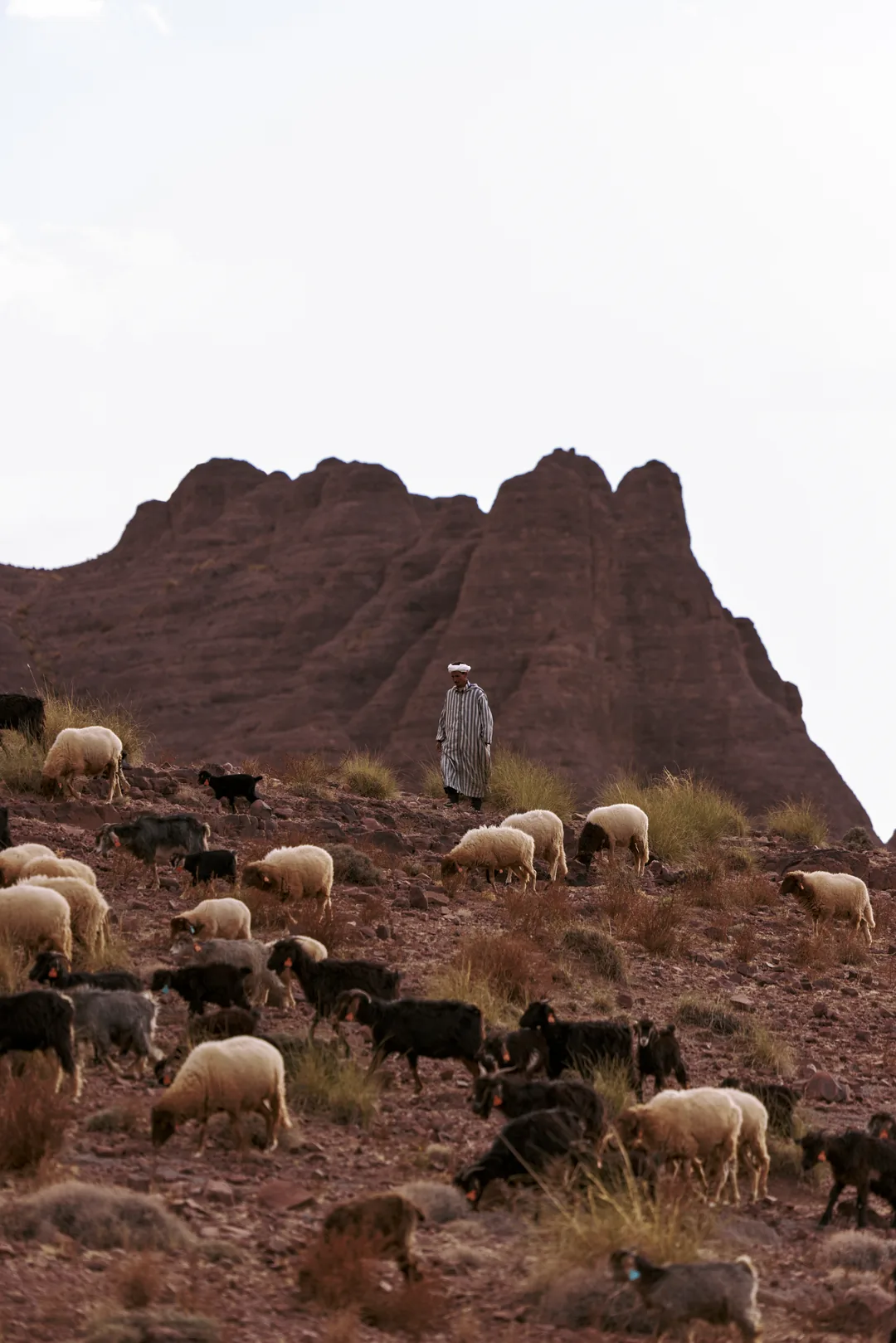
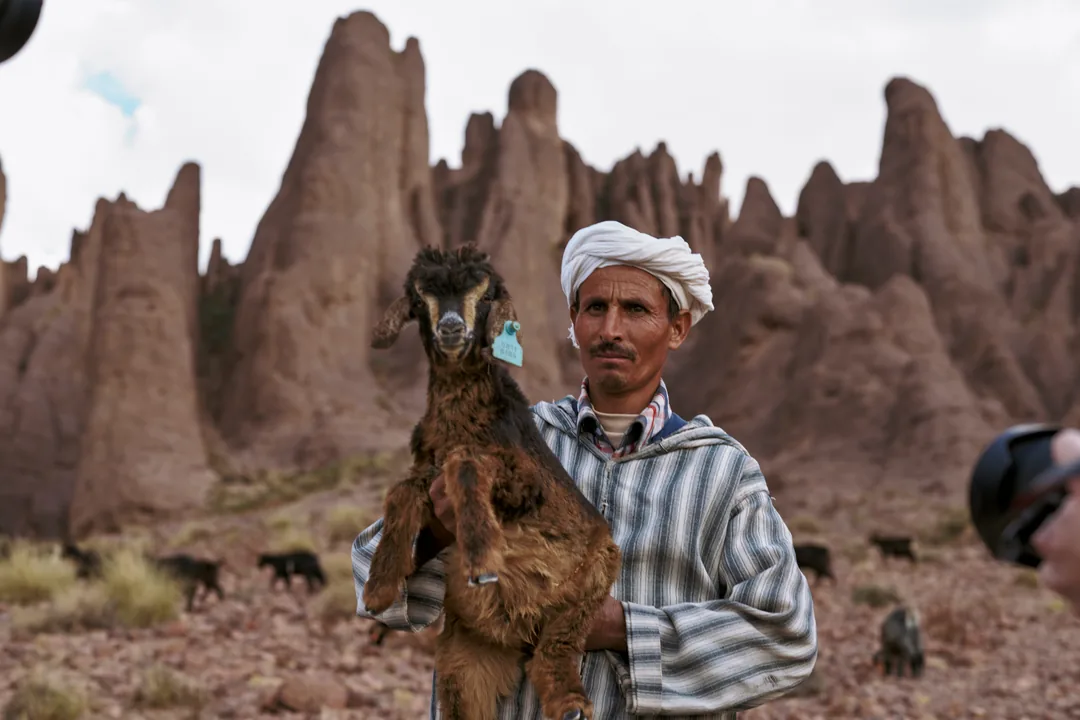
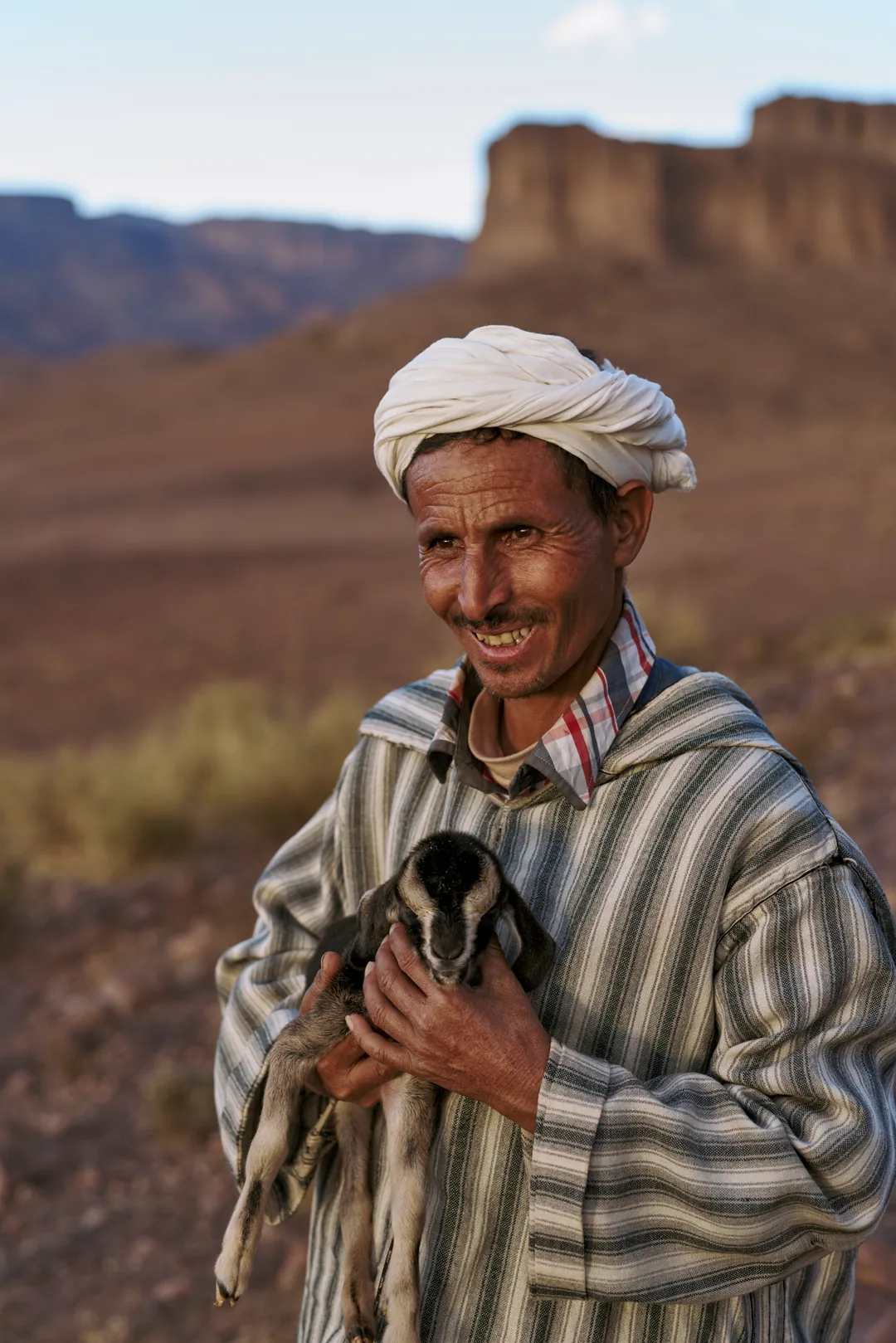
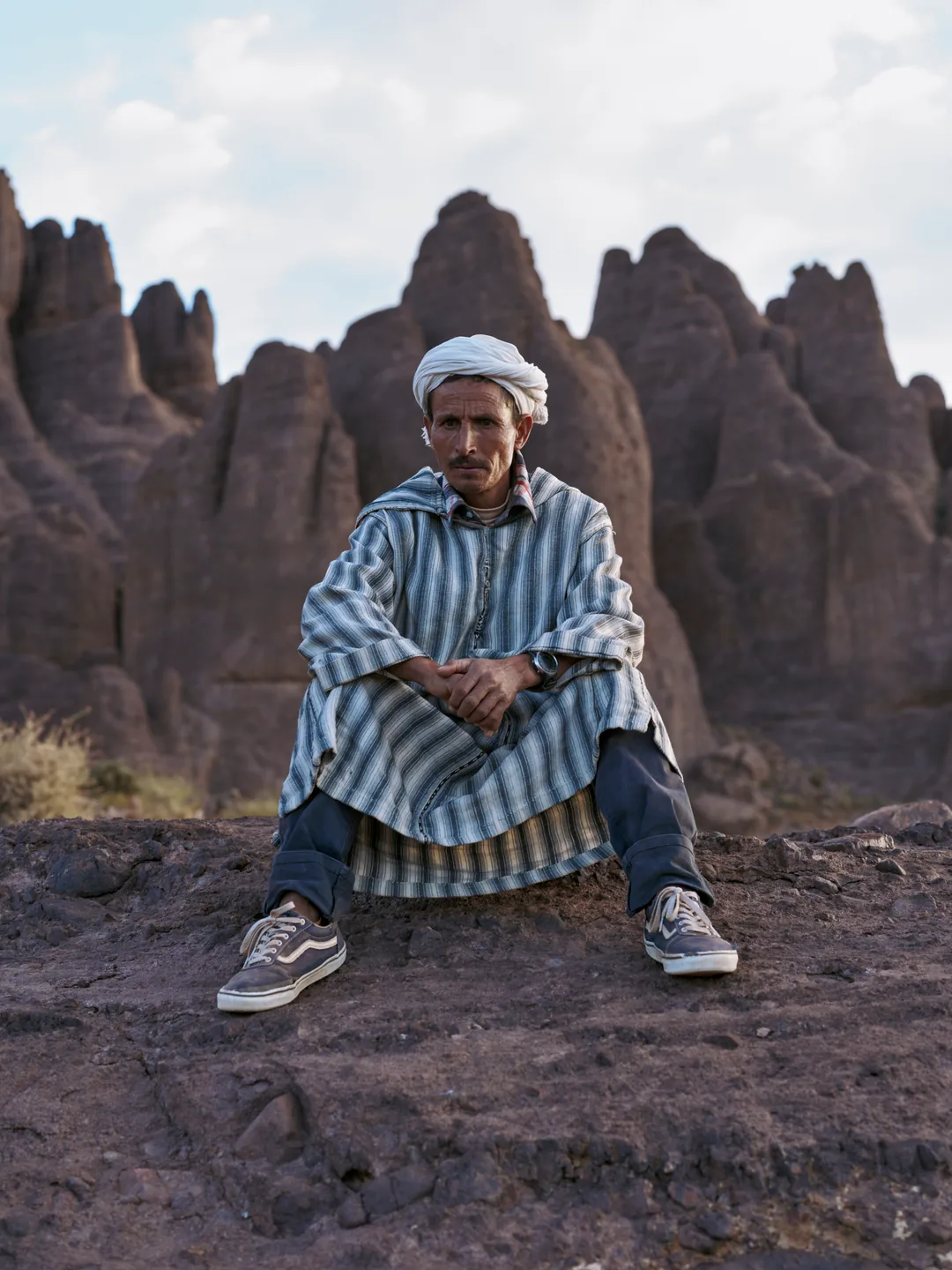
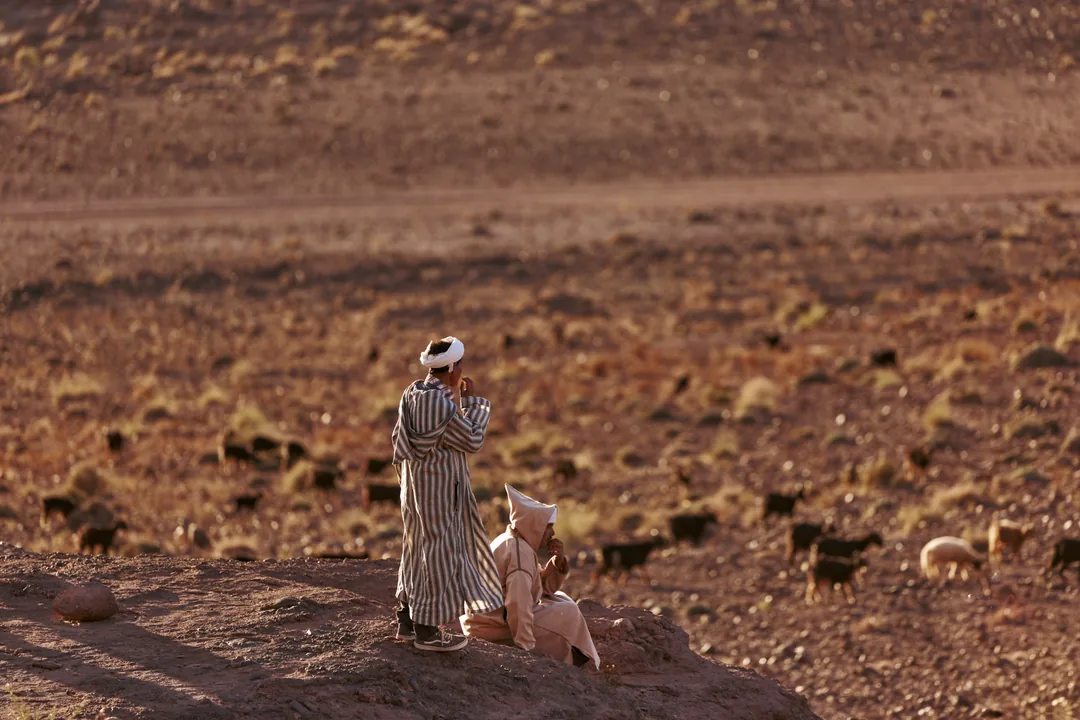
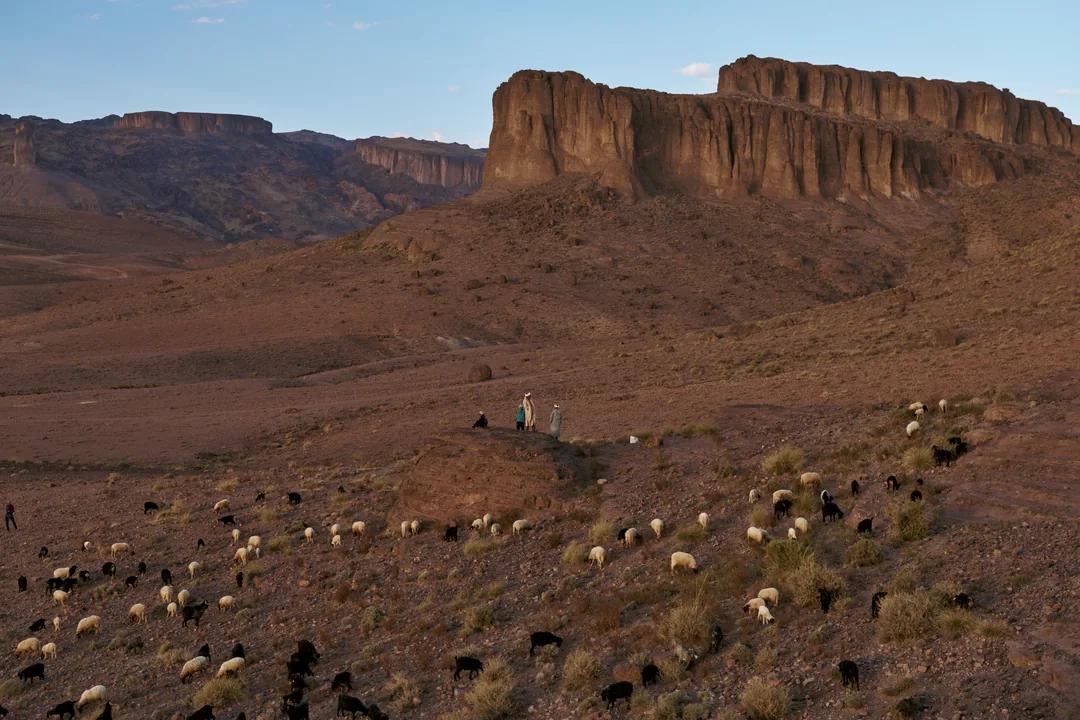
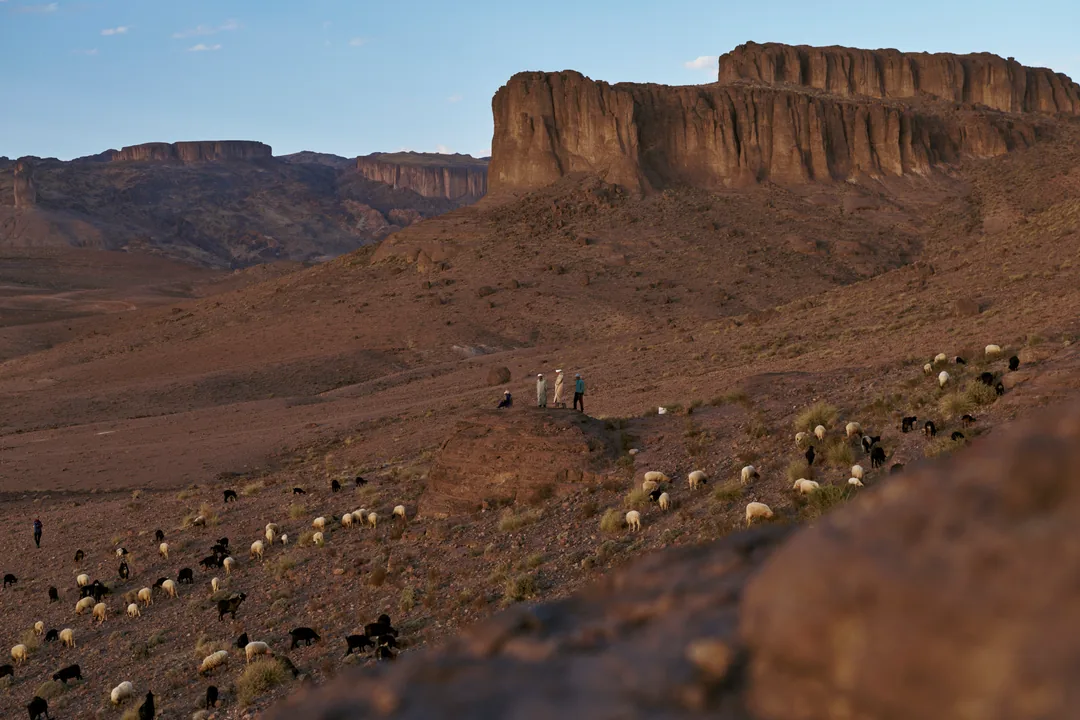
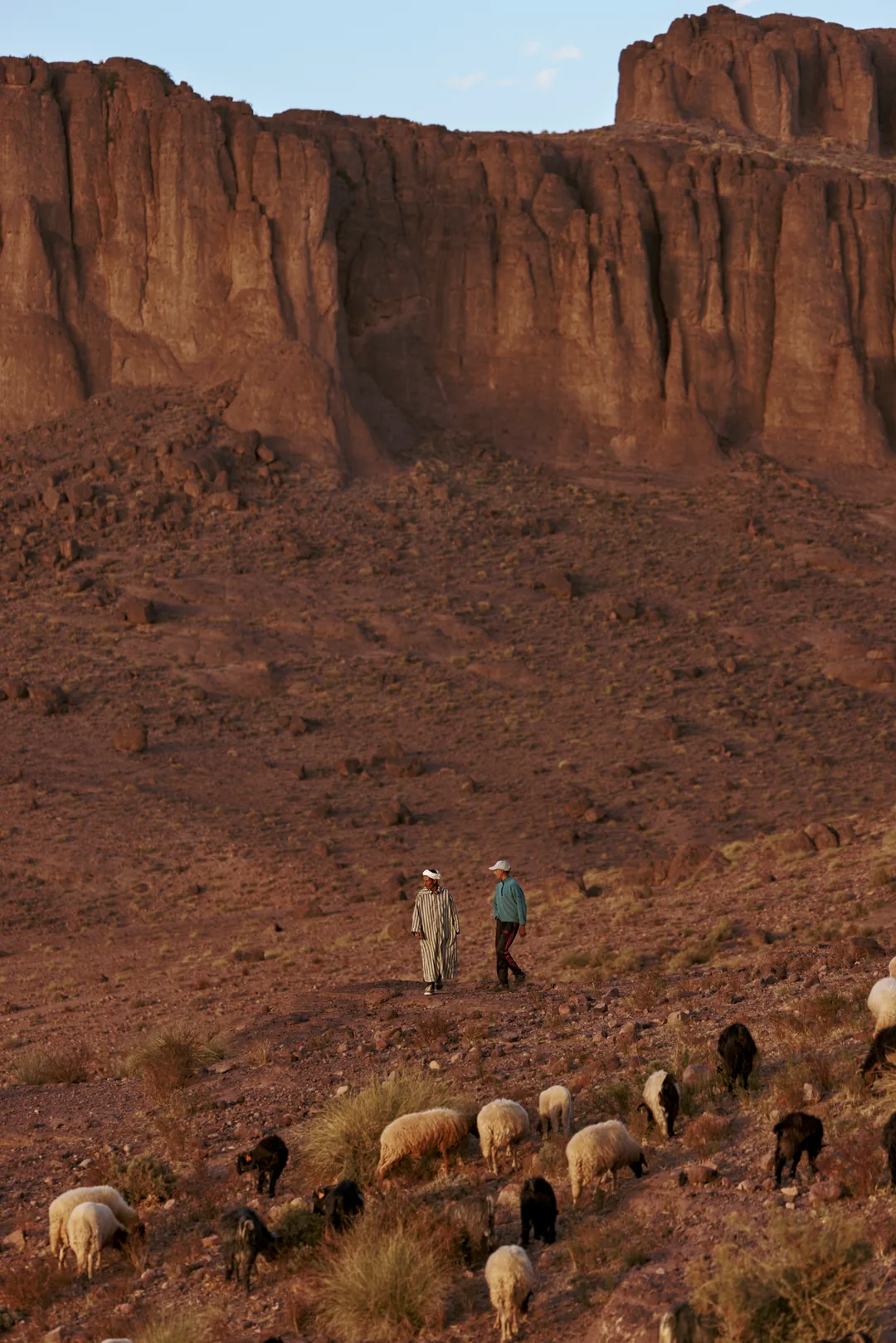
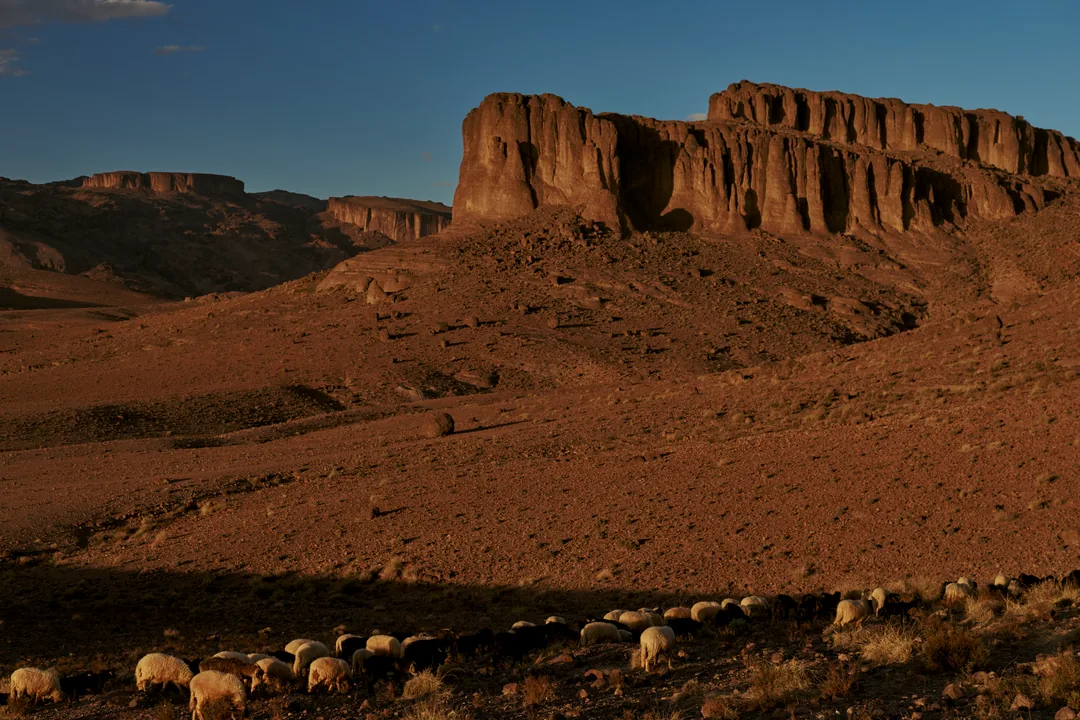
He held the kid the way you'd hold something both fragile and routine—one arm under the belly, the other free. The flock numbered maybe sixty head, mostly sheep with a handful of goats mixed in, and he knew them individually. A ewe with a torn ear. A black goat that always wandered left.
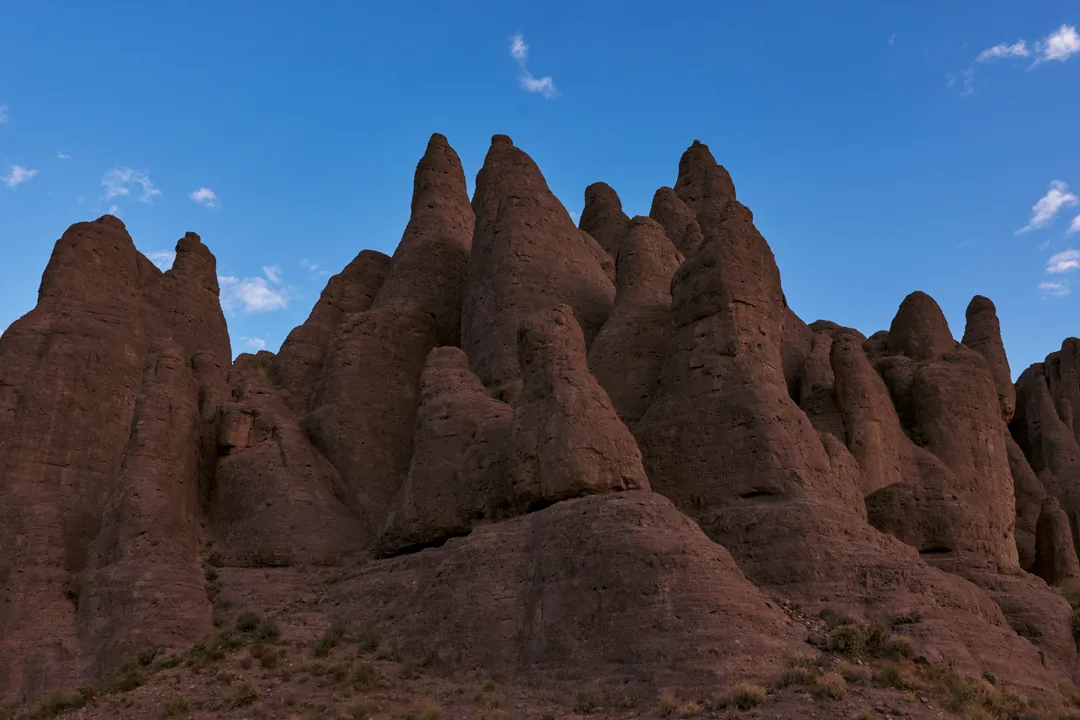
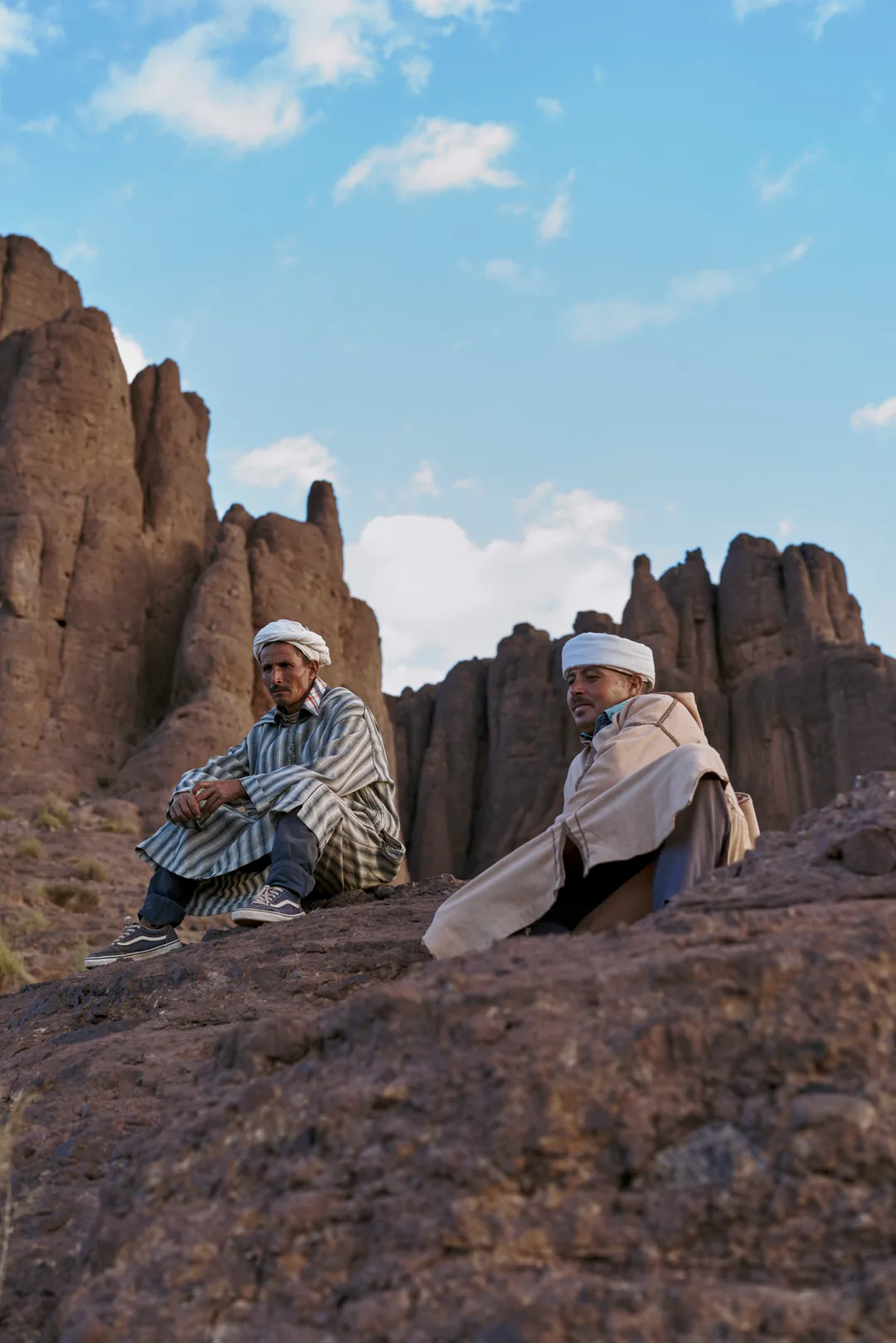
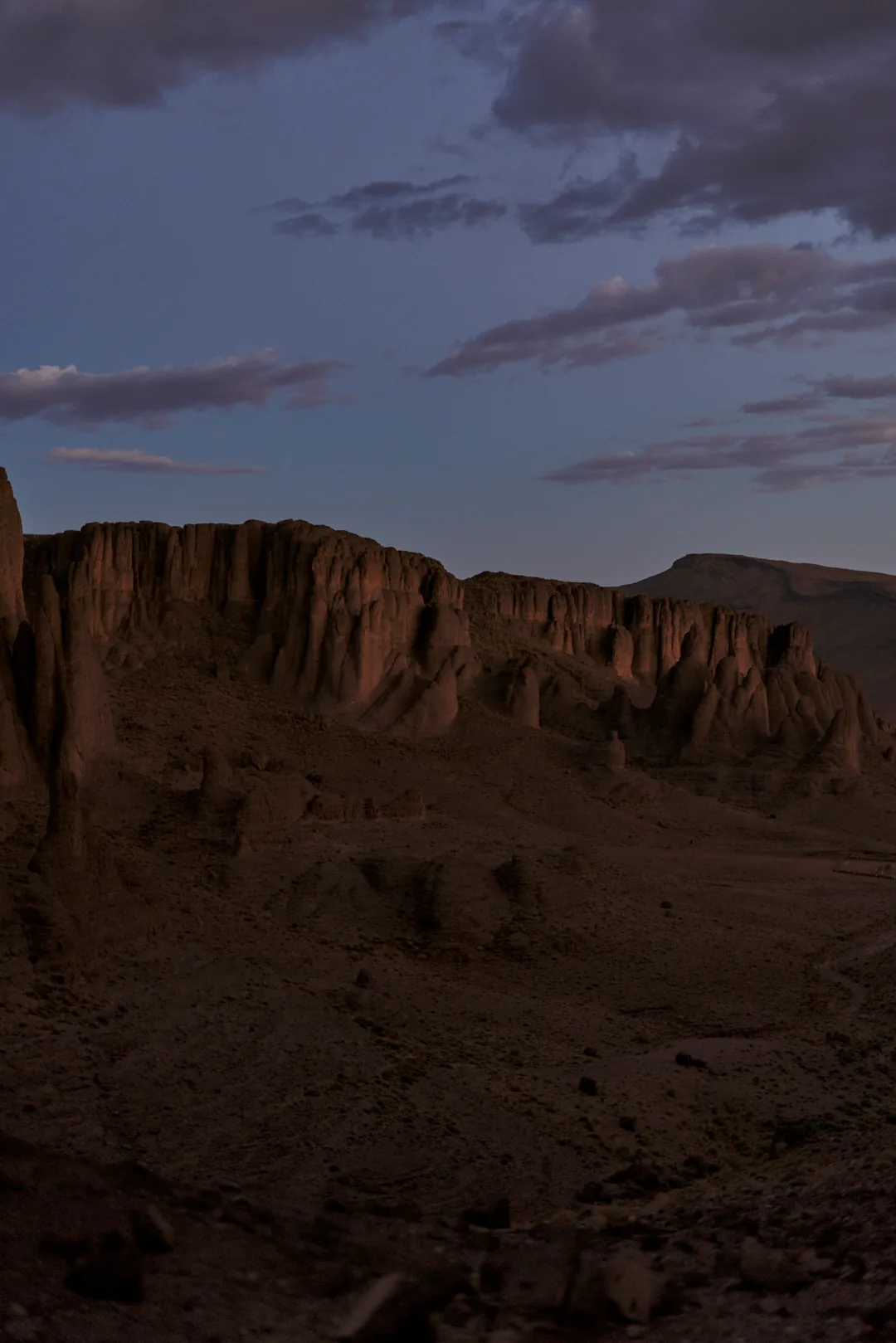
The pinnacles behind him looked like a city from a distance. Up close they were just rock. The herders paid them no attention. They were furniture.
Between Water and Pasture
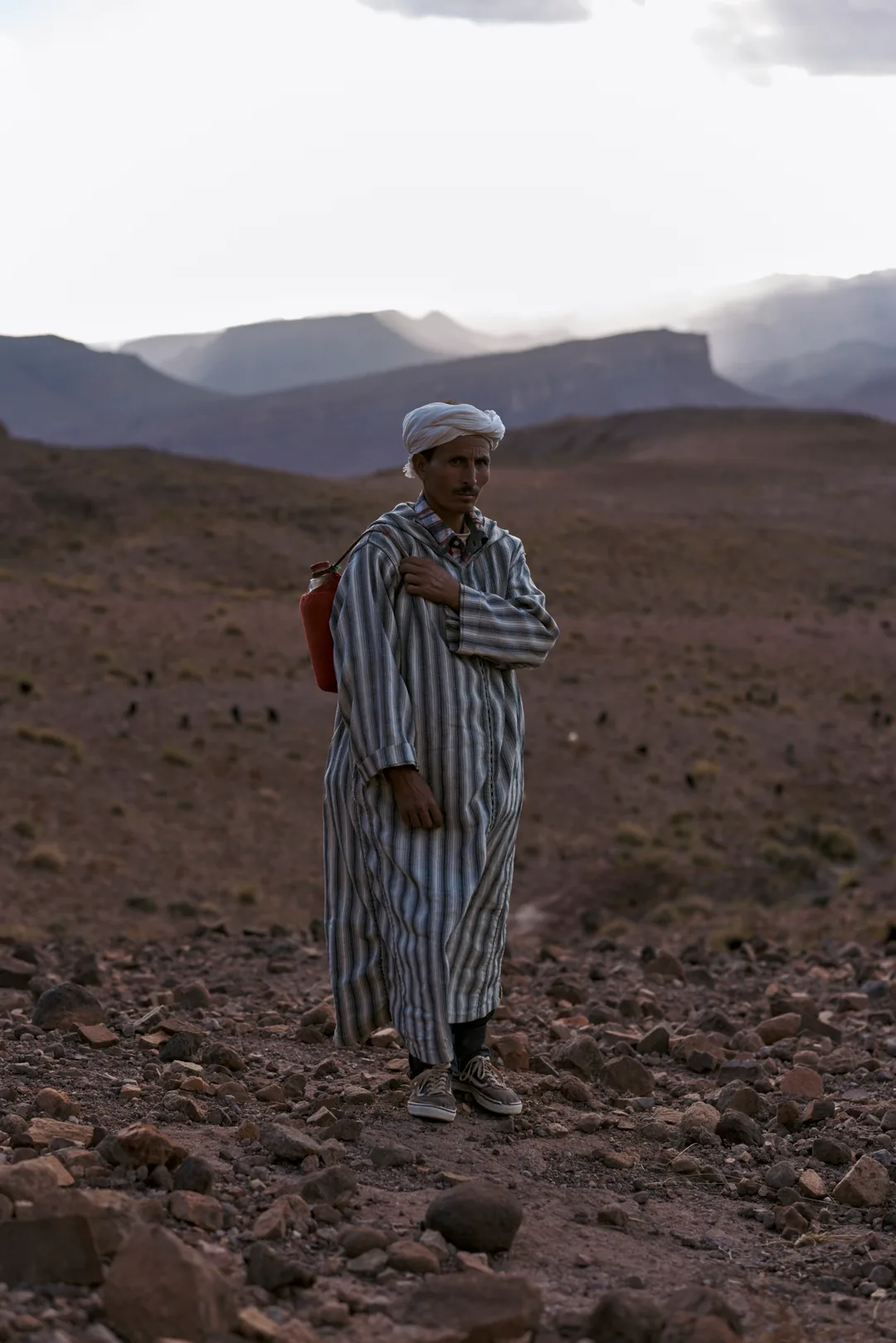
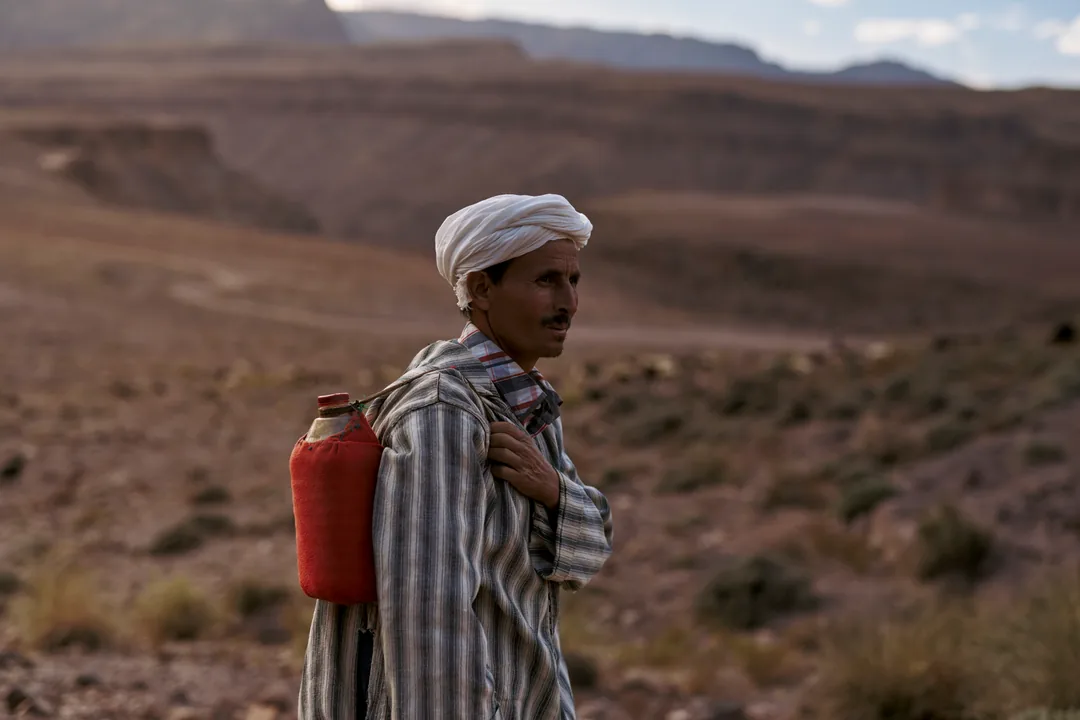
The nearest water source was a forty-minute walk. He carried it in a red jerry can slung over one shoulder, the djellaba bunched around the strap. The route hadn't changed in his lifetime, or in his father's.
In the Saghro, water determines everything: where you camp, how long you stay, which direction you move next.
Fire and Tea Again
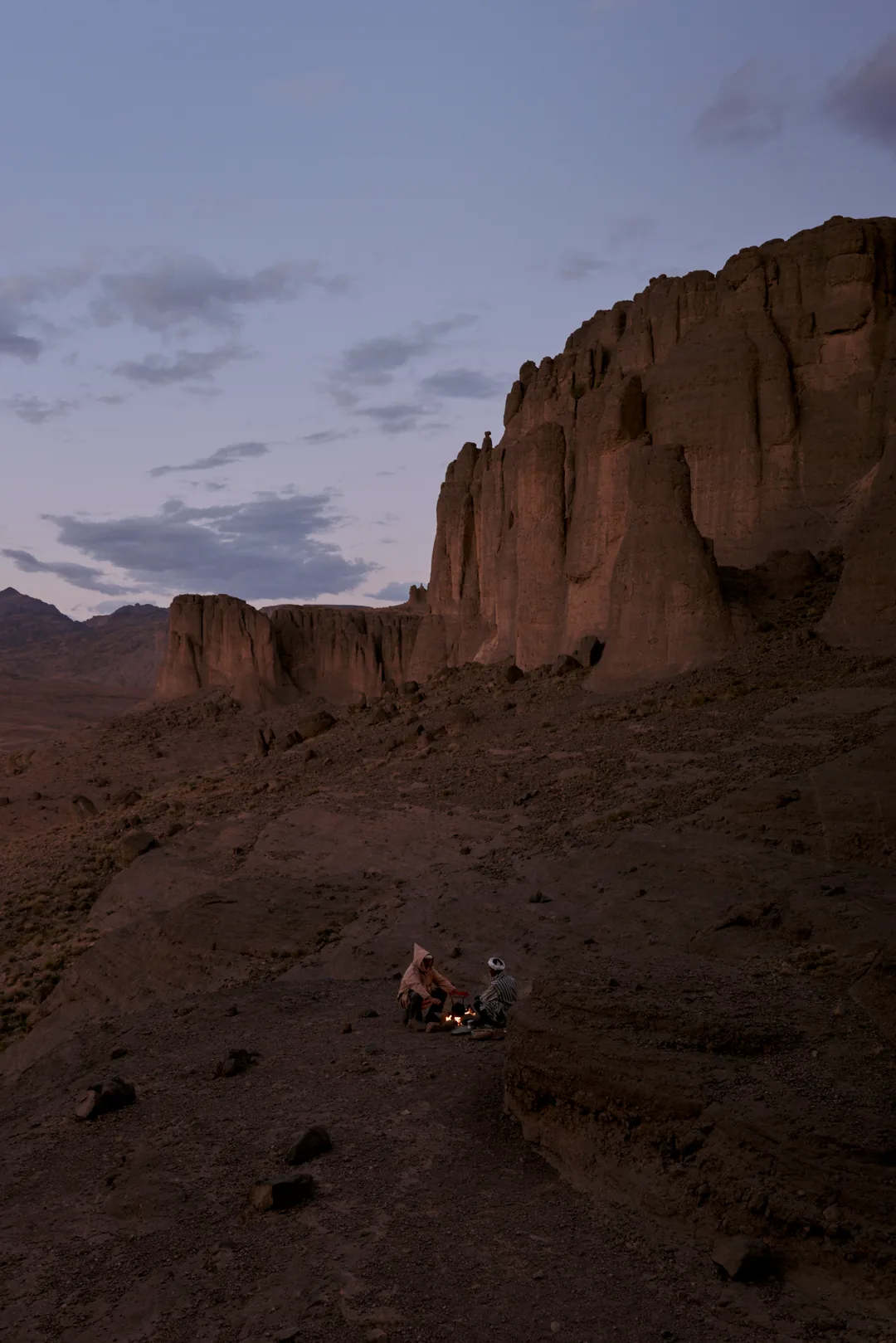
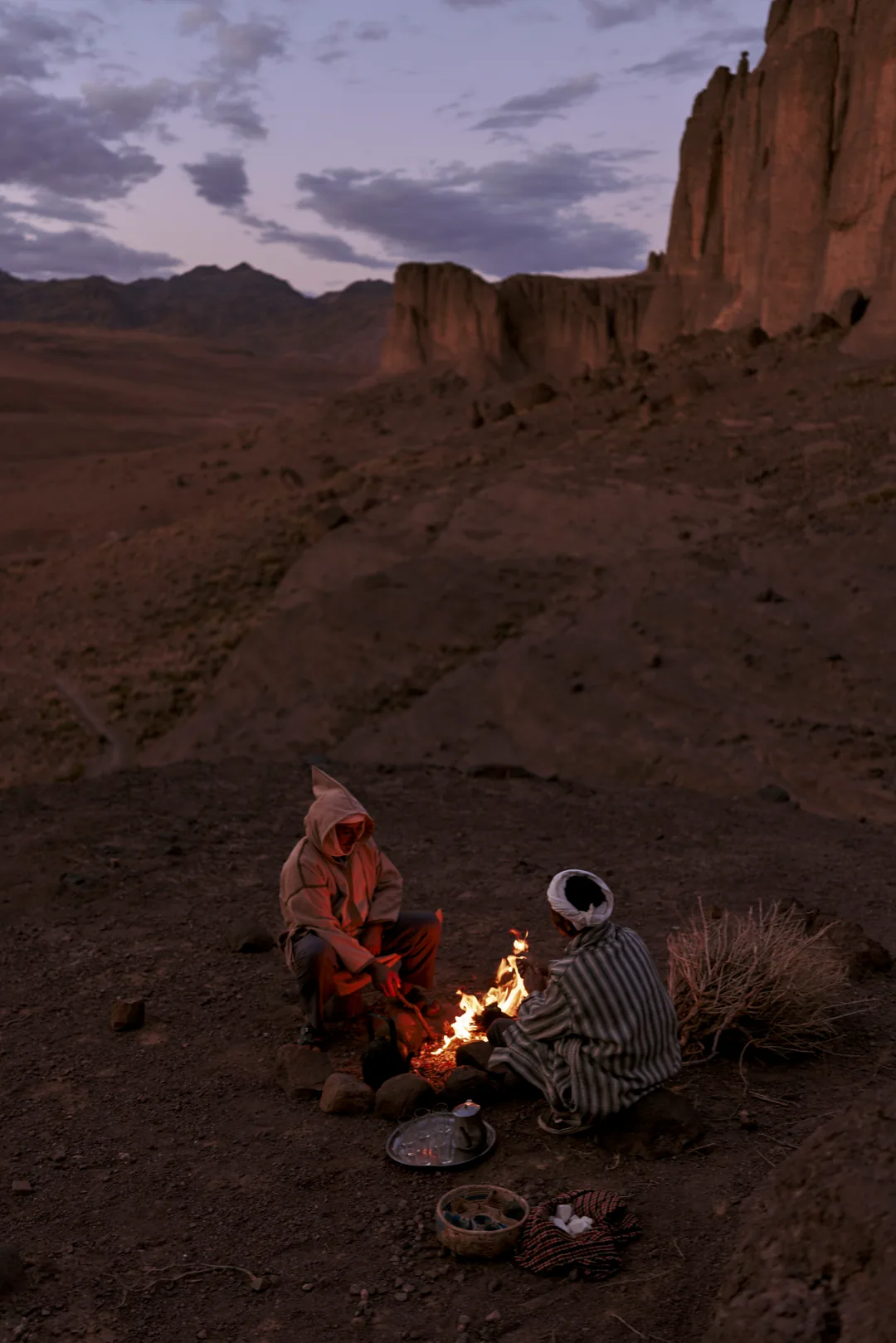
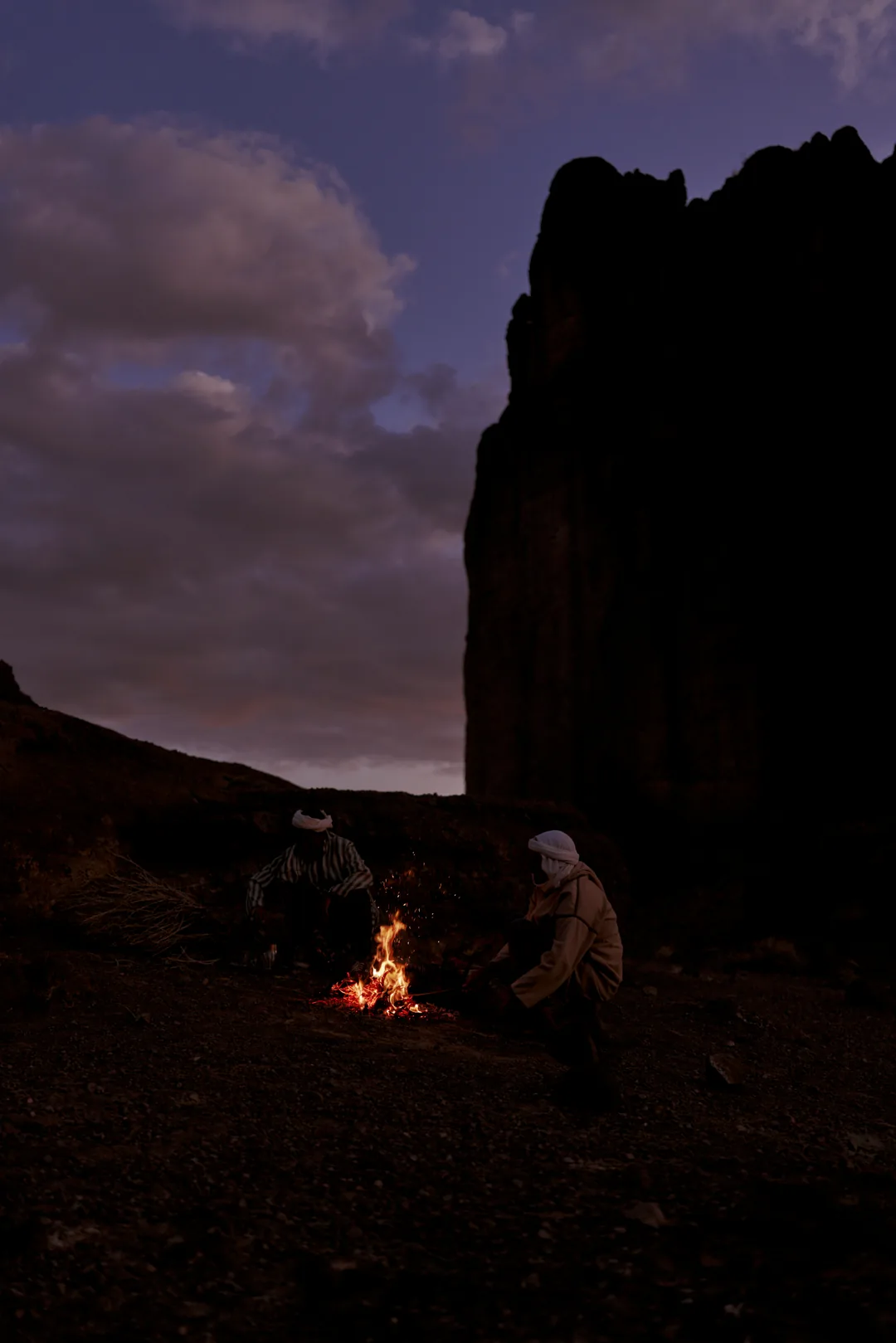
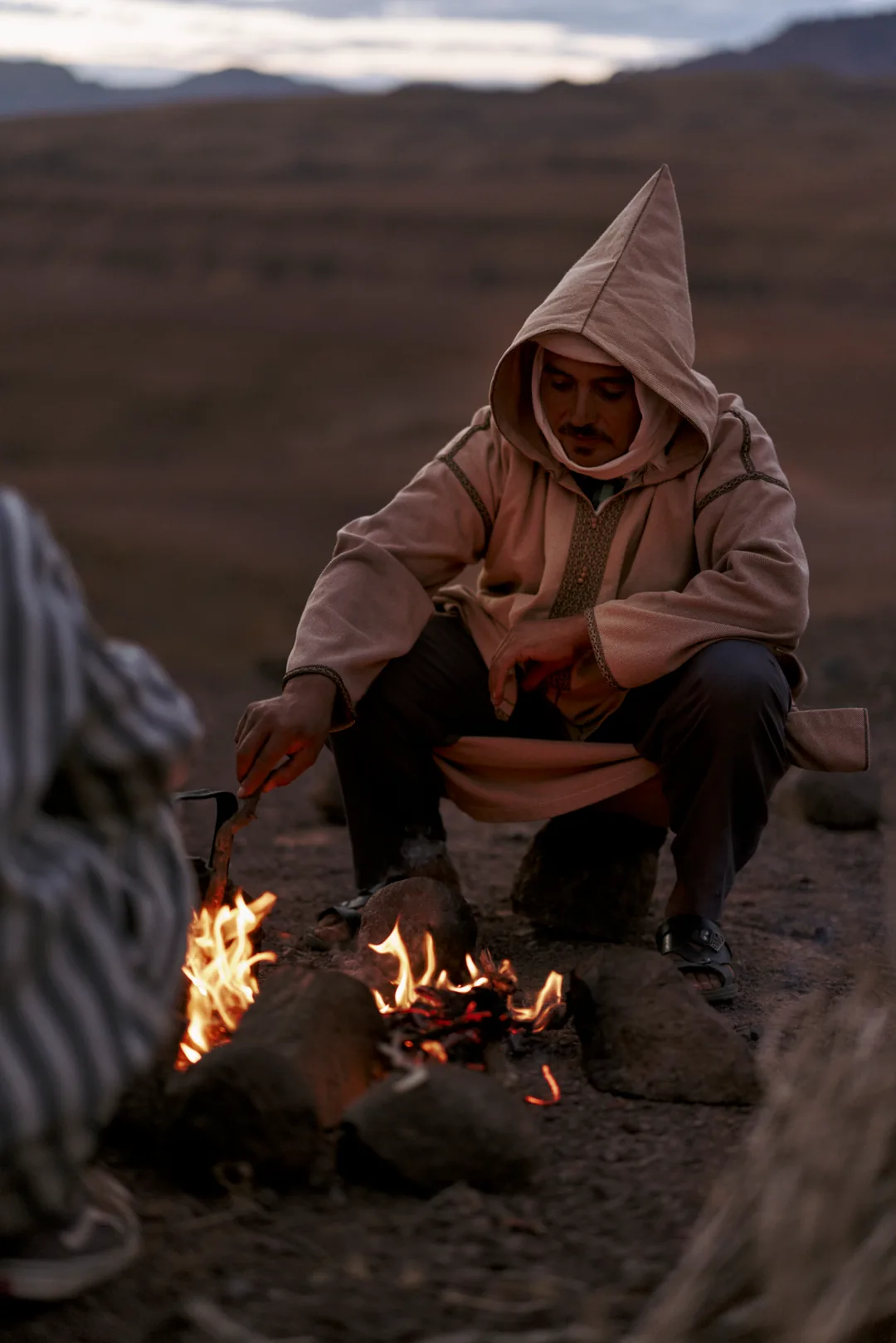
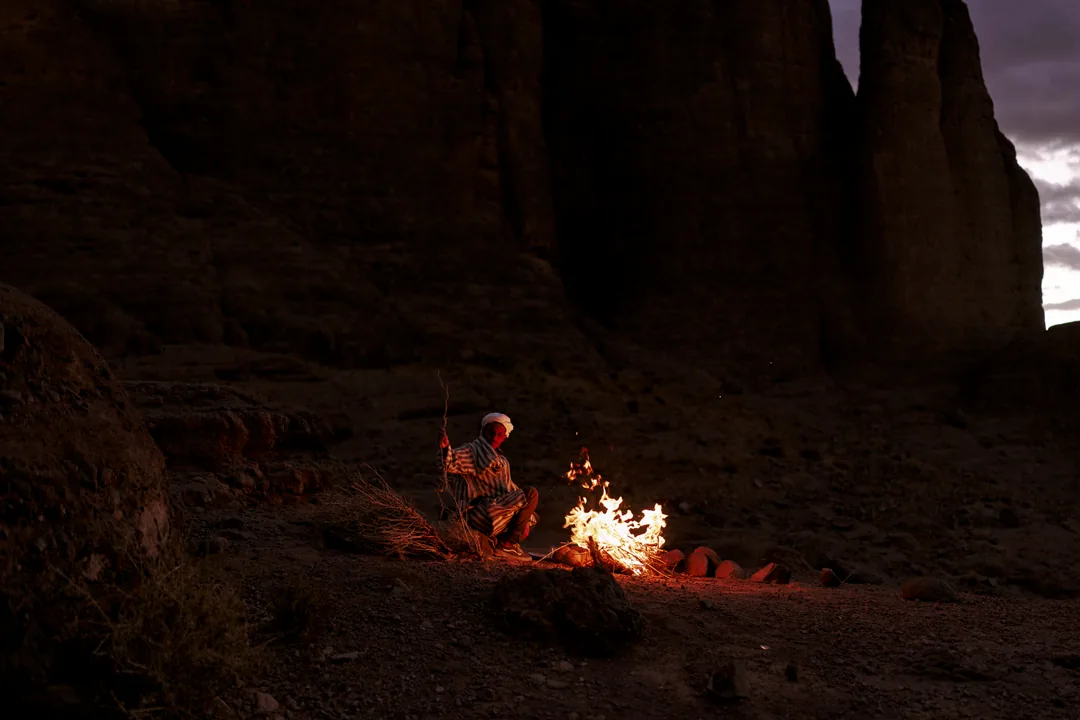
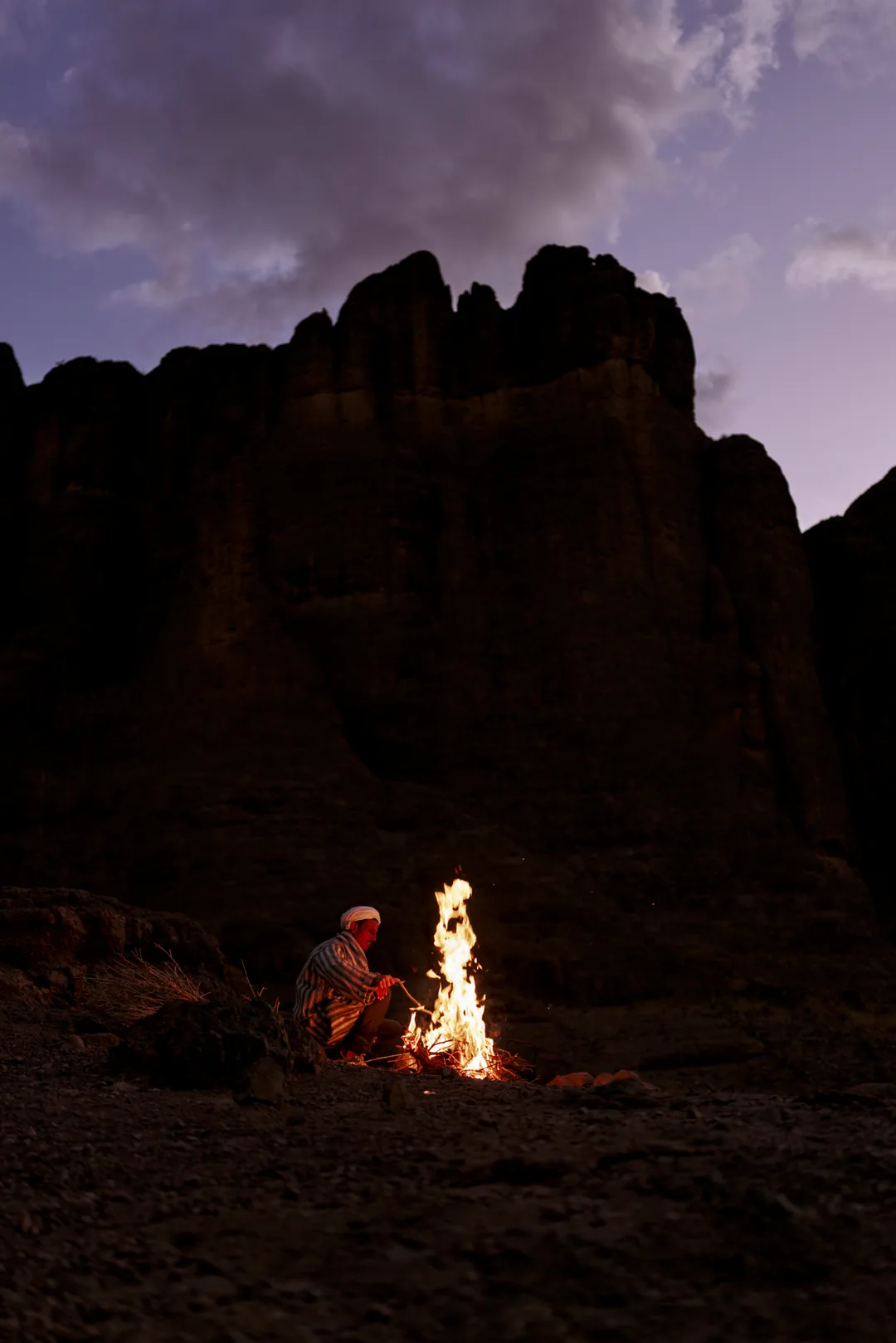
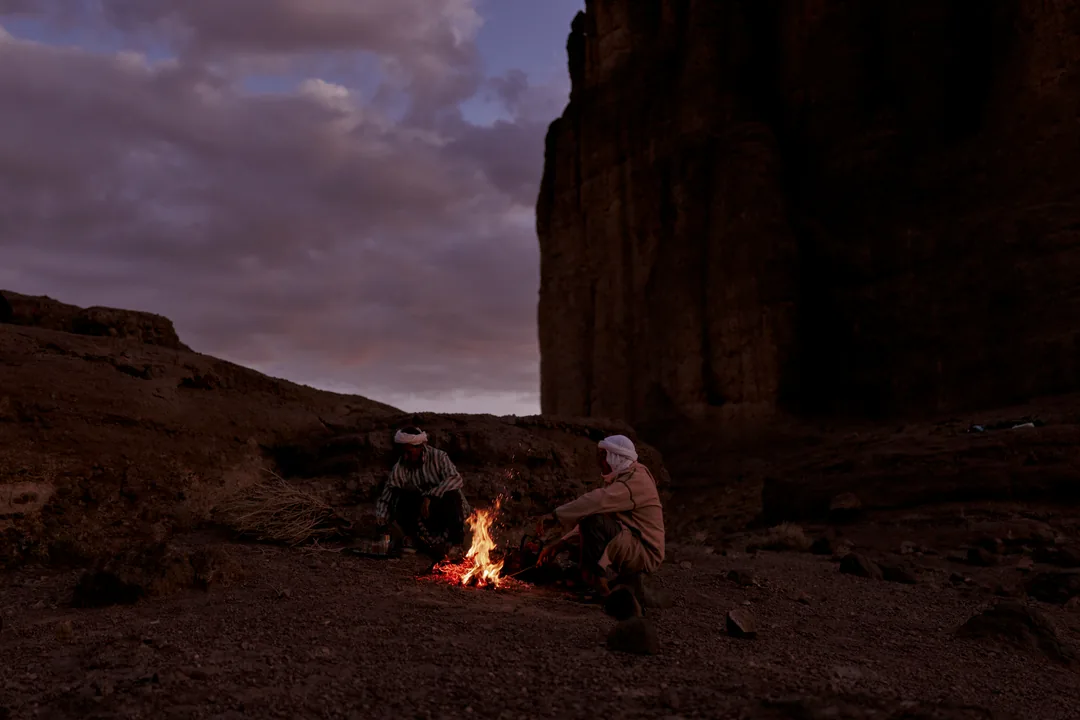
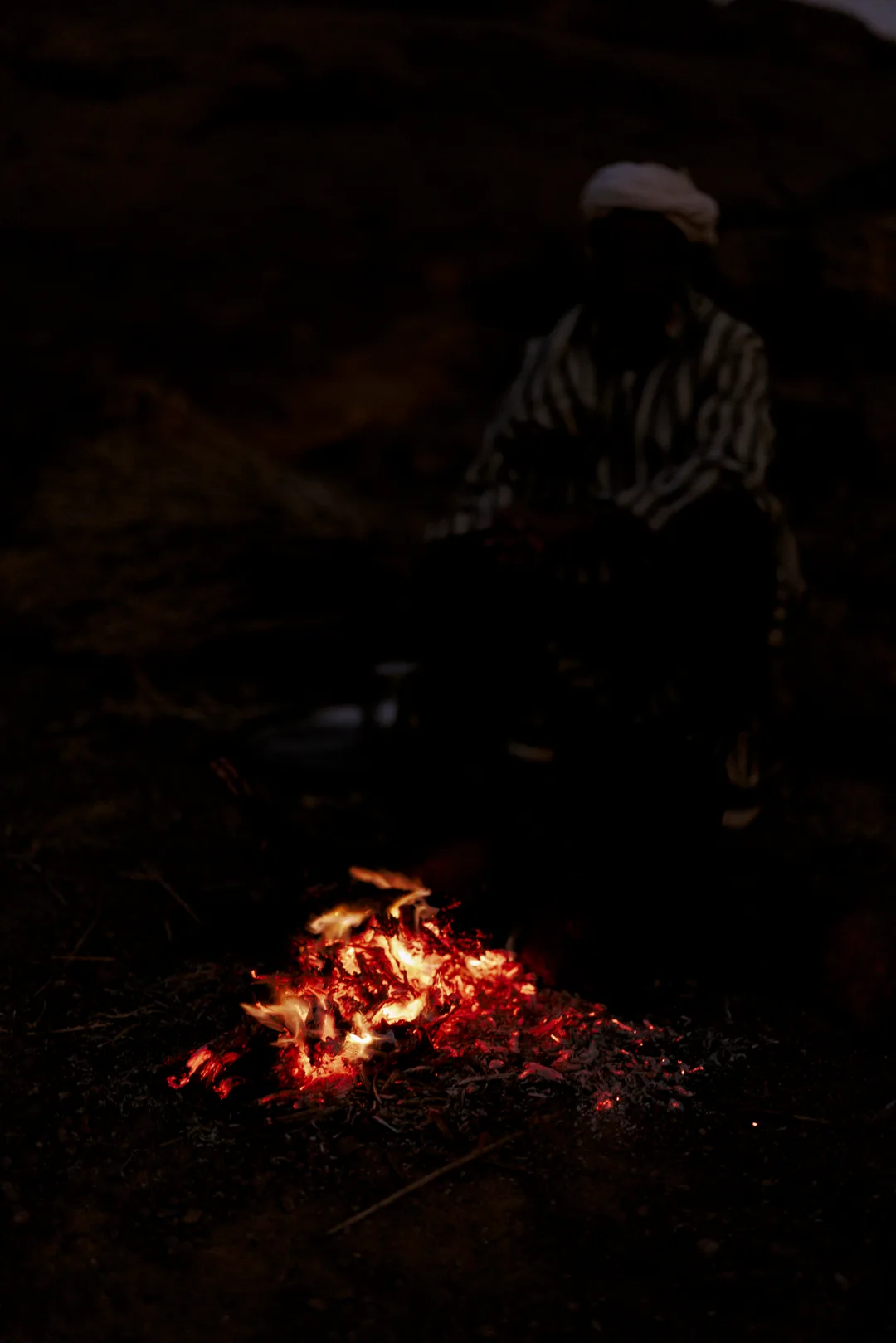
The fire served two purposes: warmth and tea. The kettle went on first, balanced on the same arrangement of stones, and the scrub brush burned hot and fast. He fed it in handfuls, leaning forward to blow on the coals when the flame dropped, his djellaba hood pulled low against the wind that came up the valley after dark.
Nobody spoke much. The fire crackled. The kettle ticked as it heated. Somewhere out in the dark, the sheep shifted and settled.
The Last Tea
By full dark, the cliffs were gone, the pinnacles were gone, the flock was a sound in the darkness. Nothing left but the fire and the faces around it and the kettle making its third round of the evening.
He poured the tea the same way he had that afternoon—high arc, steady hand, the amber catching the light of the coals instead of the sun. The gesture was identical. The light had changed completely.
DOSSIER 011 · PROOF SHEET
Selected frames.